A Presidential Book Tour of DTS
As a member of that rapidly vanishing generation who knew and studied under Dallas Theological Seminary’s founding president
As a member of that rapidly vanishing generation who knew and studied under Dallas Theological Seminary’s founding president, Lewis Sperry Chafer (that’s him, front and center; I’m in the second row, twenty-second from the left), as well as someone who has known all of our presidents, I can reflect briefly on our rich DTS heritage as personified by our presidents and conveyed through their writings. And as someone in the late winter of his life and ministry, I want to add my word of encouragement and challenge to those of you in the early springtime of yours. There is a time to remember and a time to look ahead, and I intend to do both. We are wiser and richer for knowing and appreciating our heritage.
Lewis Sperry Chafer’s vision and passion for what would become Evangelical Theological College (later Dallas Theological Seminary) came out of arose from numerous encounters with young pastors and seminary students who complained that their seminary experience gave them inadequate theological and biblical training. Several asked him to take them on and disciple them. Over the years, an initial vision for a seminary matured into specific plans which Chafer shared with others who saw the need and caught his vision.
Short in stature and without formal theological or biblical training, Chafer stood tall in faith, determination, and perseverance. He refused to be overcome by what others saw as insurmountable obstacles. In October 1924, in a rented house in South Dallas, the seminary opened with twelve students and a faculty of five.Two years later, it moved to the present location of the Dallas campus.
Chafer laid a foundation of rigorous, comprehensive Bible and theological training. He stressed the importance of mastering each lesson on the day it’s it is given received, and upon along with the importance of constant reviewing until complete familiarity is secured. He constantly drove home the absolute necessity of a personal walk of faith independance on the Holy Spirit. He championed the message of grace. And he practiced what he preached and taught.
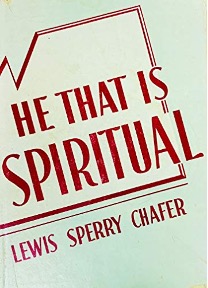
“The highest motive for yielding to the will of God is not the mere desire for victory in life, or for power, or blessing. It is that we may live the sacrificial life which is the Christ life. Sacrificial does not mean painful; it is simply doing Another’s will. Some pain may be in the path; but the prevailing note is joy, and the blessing of the heart is peace.”(95)
Larger than life in physical stature and personality, John Walvoord, our second president, brought an enlarged vision and renewed energy to the campus. In his thirty-four years as president, he led us through a great period of change. Persistently, passionately, and steadily, he enlarged and strengthened fortified the faculty, broadened the support base, and, house by house and lot by lot, added to the campus footprint to accommodate a steadily growing student body.
Chafer’s initial vision was for a student body of one hundred.,though But by the time of his death in 1952, it had grown to almost three hundred. Walvoord envisioned a student body of five hundred, with facilities to match. By his retirement, the student population had grown to more than 1,600, and the facilities had expanded to keep pace. Walvoord had a prodigious capacity for work—writing, teaching, administering, traveling on behalf of the school, spearheading building projects—yet he still had time to mingle with everyone on campus, sometimes eating lunch with us in the basement of Davidson. Under his leadership, the seminary’s influence spread worldwide. Through his teaching, writing, and speaking, he became the leading twentieth-century spokesperson for premillennial dispensationalism.

“Today as never before a believer in Christ needs to have a clear vision of his Saviour, an intimate walk of fellowship, the inner peace and power that come from such association, and the unclouded hope of the life to come with its resurrection from the dead, it’s glorious body, and its fulfillment in the presence of the Lord.” (22)
“How little our sacrifices, our acts of unselfishness, and our suffering the slights of men seem in the shadow of that cross. If Christ was willing to do this for us, what stands in the way of our forgiving others and having complete spiritual fellowship with all those of like mind in Christ?” (57)
One could argue that in some ways, Donald Campbell had the toughest presidential task of them all: following a strong, long-tenured, highly effective giant of seminary leadership. In addition, the 1980s brought culturally and financially turbulent times to DTS. Campbell’s calmer personality and collaborative leadership style differed from Chafer’s or Walvoord’s. And he was just the president we needed for those times. (I can say the same of each of our presidents.);each one differed significantly from all the others, and each provided just what was needed for that time.) Campbell’s ensured that we had a quiet, reflective, strength steady hand on the tiller ensured stability in stormy times.
Atone board meeting, he shared his “Seven Realities of Wise Leadership.” They’reworth reflecting on again now:
1. I can’t control everything.
2. I can’t fix everything.
3. I can’t explain everything.
4. I must be capable of making decisions.
5. I can’t please everybody.
6. I need to surround myself with strong people.
7. I will accomplish a great deal if I don’t care who gets the credit.
Campbell accomplished a great deal both before and during his eight-year presidency.During his presidency, the diversity of the DTS community broadened in beautiful[LW5] numerous ways, along with the range of degree programs offered. The Dallascampus added Turpin Library, the Mitchell Ministry Center,the Hendricks Center for Leadership, and the academic building later bearing renamed for President Campbell’s name.

“God never gives a command without a promise; He assured Joshua of a lifetime of continuous victory over his enemies, based on His unfailing presence and help.The promise ‘I will not fail you or forsake you’ may be translated, ‘I will not drop or abandon you,’ or even, ‘I will not leave you in the lurch.’ God never walks out on His promises.” (10)
“The secret to success at Jericho was not Joshua’s military genius or the army’s skill in warfare. Victory came because the leaders and the people fully trustedGod and obeyed His commands. ‘So the Lord was with Joshua, and his fame was in all the land.’ This is what walking by faith is all about—in any generation. Weall face ‘Jerichos’ at one time or another, and we too can see the walls crumble as we trust God for victory.” (57)
In 1994, Charles Swindoll became our fourth president. Chuck brough this great heart, boisterous and contagious laugh, pastoral warmth, powerful preaching, and prolific pen to the seminary. He led us in reaching the rapidly changing culture while holding fast to the faith and to our doctrinal distinctives, bathing it all in grace. The neckties and blazers vanished, and the blue jeans and Western-style graduation barbeques entered arrived.Under Chuck’s leadership, DTS updated existing buildings, built Swiss Tower(now called Swindoll Tower), and gained a stronger hearing and influence throughout the evangelical world.
“Grace scales the wall and refuses to be restricted. It lives above the demands of human opinion and breaks free from legalistic regulations. Grace dares us to take hold of the sledge of courage and break through longstanding stones. Grace invites us to chart new courses and explore ever-expanding regions, all the while delighting in the unexpected. While others care more about maintaining the wall and fearing those who guard it, grace is constantly looking for ways to freedom. Grace wants faith to fly, regardless of what grim-faced officials may say or think or do.” (303)
Mark Bailey’s steady, wise, strong leadership from 2001 to 2020 guided us through an era of unprecedented opportunity and sometimes-turbulent culture. Bailey’s bold-but-prudent strategic initiatives—including the China Project, online courses, video courses to extension sites, courses in non-English languages, ongoing renewal on campus, the renovation of the campus’s two oldest buildings and the construction of two new buildings—and his strong presence and godly influence on campus made Bailey, blessed with gifts in administration, scholarship, and pastoring, God’s leader for that time. Now as our current chancellor and a senior professor inBible exposition, Dr. Bailey continues to encourage the DTS community.

“Isn’t it wonderful that the Lord is open to us day and night, every day and night of our lives? The Creator, the One who holds our lives in His hands, is available to each one of us. And He’s not just receptive to us, He invites us. . . . His invitation to us is simple as well as profound. He simply tells us to come to Him. . . . It’s an open invitation; He’s always there. The privilege of coming to Him is continuous.”(14)
Thanks to the skillful, effective, godly leadership of Mark Bailey and the four presidents who preceded him, DTS was on course and full steam ahead when Mark Yarbrough took the helm in July2020. He was God’s chosen leader to begin a presidency at the precipitous time of a global pandemic—which is good, as that year represented an uncomfortable moment for the world in learning to endure a pandemic. With scholarly training and wide-ranging ministry experience, including DTS ministries and leadership at many levels over twenty-three__years, Yarbrough is uniquely prepared to understand our chaotic times andprepare our students to minister effectively in them, while remaining firmly grounded in God’s inerrant, unchanging Word.
To get to know this fun-loving family man, listen to a few of his chapel talks or attend one of his Story ofScripture events. As you learn more about engage with him, you’ll thank God for this singing, preaching, strategic-thinking, outdoors-loving, cowboy-boots-wearing seminary president.
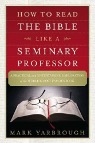
“I have a conviction that things unfinished should be finished. While that applies to all of life, that is especially true of biblical studies. Our study simply can’t exist at the knowledge stage.It must move beyond facts and figures. Although we must know it and work it, our personal understanding of the truths of Scripture is in vain without the action to live it. Here’s the haunting truth: According to the Bible, to know and not do is to not know at all.” (296–297)
Each of our six presidents differed significantly from all the others, and each providedjust what was needed for that time. Our six presidents,each one different from all the others,Yes theyshare these vital strengths:
1. They give us examples of a courageous person of strong godly character whoconsistently walksedthe walk.
2. They model a total commitment to Dallas Theological Seminary.
3. They’ve each left their indelible imprint in making DTS what it is today.
4. All of them have loved life, loved the ministry of seminary leadership, andloved their Lord with a contagious enthusiasm.
As someone who has known every president of DTS, I am grateful to God for the leaders he has brought us, ensuring that the seminary responds rightly to every time and situation.
As a reader, I love seeing these book images. The covers also convey the personality and times. When the design is set, consider how the page breaks and book image placement will impact the content. In this draft, moving to this page, it looks like this book goes with John Walvoord. I had to look at the author’s name on the book image to clarify what I was reading. Spacing or subheadings of the presidents’ names might clear up any confusion.
Consider if there’s any imbalance of offering two quotesfrom some books but only one quote from others. Does this imply a valueassessment? Not knowing the context, simply as a reader, I suggest choosing onequote per book.
About the Contributors