DEPEND ON THE LORD LEARNING TO RECEIVE
“IT HAS ALWAYS BEEN NECESSARY FOR US TO REMAIN ON OUR FACES BEFORE GOD, THAT WE MAY KNOW HIS WILL FOR THE GROWING WORK AND CONTINUALLY EXPERIENCE HIS DELIVERING POWER.1 ”
- LEWIS SPERRY CHAFER
God calls us to depend on him for all our needs. Sometimes we see God’s faithfulness so clearly that praising him comes easily. But we also endure seasons in which his provision seems uncertain. When the gap between income and expenses widens, we may wonder: Will God really come through again this time? In those moments, we continue to hold on to his promises, and we gather strength from looking at how God has come through in the past.
We regularly receive strength from the Bible’s many examples of people who trusted God in times of uncertainty. Remember Elijah? During a time of famine, God miraculously used ravens to feed him. But then God led Elijah to the next place of provision: the home of a widow and son who were starving. Is this where God will provide? Elijah continued to trust God, and the widow trusted Elijah—and God provided miraculously again, giving the widow an abundant supply of flour and oil (1 Kings 17).
Or consider the day thousands of people followed Jesus to “an isolated place” (Matt 14:15). He knew they’d be hungry, and he knew no food service was available way out there. He also knew his Father is gracious to provide. The miraculous multiplication of bread and fish teaches us such an important lesson about depending on God that all four Gospel writers told the story.
Writing about Proverbs 3:5, Chuck Swindoll once said, “God doesn’t ask us to forego planning or to throw ourselves blindly into decisions. He calls us to give greater priority to trusting Him. Let confidence in God’s character, power, plans, and past faithfulness be the foundation of all your decision-making as you exercise sound judgment.”2
Lewis Sperry Chafer drew strength from the Bible’s examples and instructions to begin Dallas Theological Seminary with good planning and radical trust. He believed God would always provide for the school’s needs, including finances. In his leadership, Chafer modeled a life of seeking God’s provision through prayer. He often gathered members of the seminary’s community to kneel with him in spontaneous prayer for the school’s urgent needs. The needs sometimes felt overwhelming—as when Chafer wrote in 1927, “The burdens are almost beyond our bearing this morning.”3 But he pondered stories of God’s provision in the past, and he eagerly expected God to work again. “This school won’t close as long as the Lord is willing to see it go on,” Chafer affirmed.
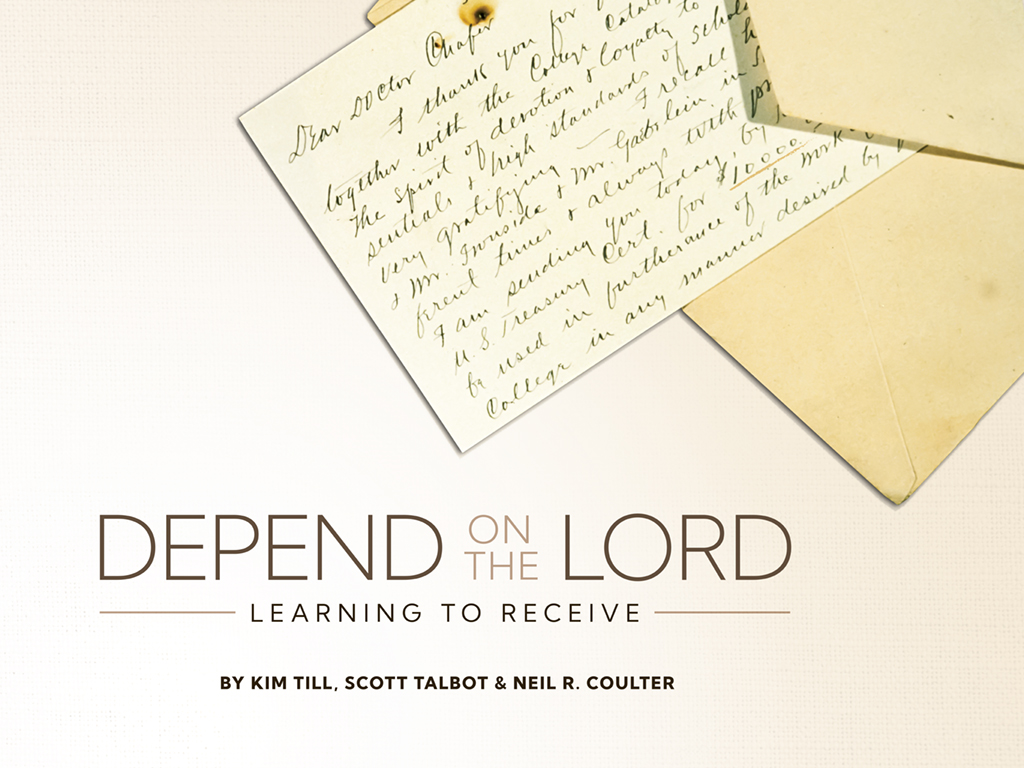
Chafer’s favorite story of God’s provision took place in 1929. That spring, the school faced a $10,000 debt. Chafer led his colleagues in prayer that the debt be resolved by the day before commencement in May. Two weeks before commencement, several people, including Chafer, awoke at five in the morning with a burden to pray for the school’s finances. But still the debt remained. The morning before commencement, the seminary staff sat in the office like “a pretty beat bunch,” according to Chafer. Then a registered letter arrived. Chafer opened the envelope and found a US treasury certificate for $10,000. The money came from a bank president in Illinois with no previous financial relationship with the seminary. Two weeks earlier, he had awakened at five in the morning, sensing the need to pray for the seminary and send his support. Chafer walked back into the office, casually tossed the check on the floor, and said, “There it is, men.”
The history of Dallas Theological Seminary stands with examples from Scripture to strengthen our faith in God, our Provider. Like the bank president who helped DTS through a challenging time, other donors have also followed God’s leading to provide for DTS through the years. They form a special part of the seminary’s legacy.
God wants to teach us all to be humble, grateful receivers as we walk with him. Our response is to trust him, even in the hard times, eagerly anticipating the next moment we can say, “There it is.”
(1) Quoted in Mrs. Howard Taylor, Empty Racks and How to Fill Them (Dallas, Evangelical Theological College, n.d.), 19. (2) Chuck Swindoll, “How to Trust God,” Insight for Today, September 6, 2021, https://www.insight.org/resources/daily-devotional/individual/how-to-trust-god. (3) Quoted in John D. Hannah, An Uncommon Union: Dallas Theological Seminary and American Evangelicalism (Grand Rapids, Zondervan Academic, 2009), 112.
About the Contributors