For What Would You Wish?
“One wish…anything.” If you are a kid, or a parent of one, you might think this was a line from the film Aladdin.In that story, the genie, who was awakened from a 10,000-year nap,grants his new master three wishes. With wishes come some stipulations,one of which was that he couldn’t wish for more wishes. Makes sense.Don’t want to wear out the genie.
In the Scriptures, God grants young King Solomon one wish. Now,understand something: God is no genie. To reduce Him to such frivolousstatus would be sacrilege. That’s not to say some people don’t try todo that by the way they treat Him.
Nevertheless, Yahweh God did grant Solomon one wish. Maybe it was totest him. Better yet, maybe it was to prove him. In either caseSolomon, by his choice, demonstrated the very thing he wished for,which is wisdom. “Give me now wisdom and knowledge, that I may go outand come in before this people” (2 Chron.1:10, NASB). This wisdom wouldeventually permeate his whole life experience, from the work heperformed as king to the words he expressed as sage. Christians todayare enriched by his contributions to the believing community as theyapply to wisdom. Countries need leadership that emulates it.
Solomon’s wish was not his first encounter with God. The Scripturetells us that the Lord “loved him” when he was born the second child toDavid and Bathsheba. Nathan the prophet, for the Lord’s sake, gave himthe surname Jedidiah, which means “beloved of the LORD” (2 Sam.12:24–25). And it was the Lord’s throne on which Solomon would latersit as king of Israel and “the LORD his God was with him and exaltedhim greatly” (2 Chron. 1:1, NASB).
The wish itself came to Solomon just after his inauguration. TheLord appeared to him and said, “Ask for whatever you want me to giveyou” (2 Chron. 1:7). This was no beauty pageant interview. He was notcompeting against others before judges. His was a heartfelt response toa probing question from the God of the universe.
In the suburban section of our local newspapers is a sectionfeaturing volunteers in the community who have distinguished themselvesthrough their service. This column offers a “snapshot” of that week’s volunteer,somewhat like a personality profile. It’s interesting readingespecially when you get to the question, “If granted one wish, whatwould it be?” Some answers have been of the self-serving sort, citingsuch luxuries as a world cruise or a beachfront cottage. Others havebeen more altruistic, listing everything from world peace to the curefor serious illness.
It’s easy to critique others’ responses, but when confronted withthe question ourselves, it’s difficult to say what we’d wish for.Solomon’s response no doubt was born out of the tremendous sense ofresponsibility he felt for leading the nation of Israel. His wishsingled out wisdom because his work called for wisdom.
In the events leading up to Solomon’s appointment as king, thematter of wisdom played a key role. King David had prayed fordiscretion and understanding on behalf of his son Solomon, since he wasthe heir-apparent to the responsibility of building the temple (1Chron. 22:12). In that same blessing, David informed Solomon of theskilled artisans who were at his disposal to help accomplish the task(vv. 15–16). Interestingly, the concept of skill is at the very heartof wisdom. Both are from the same Hebrew word and are often usedinterchangeably. In 1 Kings 7:13-14, Solomon sent for Hiram from thecity of Tyre to use his special ability in building fine things. Hiramwas “highly skilled and experienced in all kinds of bronze work.”
Whereas skill and wisdom are closely connected in meaning, it isimportant to understand that they are not merely technical in function.Wisdom has a moral dimension. It was seen in Solomon’s ability to makesound judgments in difficult situations. One of his most famousdecisions involved the conflict between two harlots who were in disputeover a living and a dead child. When Solomon decreed that the livingchild be literally divided between the two mothers, his ruling exposedthe rightful mother who naturally was willing to spare the child byforfeiting him to the other woman. By this Solomon knew towhom the child belonged. “When all Israel heard of the judgment whichthe king had handed down, they feared the king; for they saw that thewisdom of God was in him to administer justice” (1 Kings 3:28, NASB).
Solomon, it could be argued, is the earthly progenitor of godlywisdom. His wisdom came as a result of making a good choice when giventhe opportunity. For Christians, the opportunity is all the moreaccessible. Jesus, “in whom are hidden all the treasures of wisdom andknowledge” (Col. 2:3, NASB), has given us the opportunity to receivewisdom from Him. In doing so, we gain the wisdom that not only affectsthe life that now is, but also the life to come. “One wish …anything.”
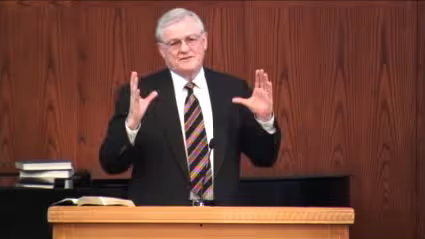
Steve Faulkner (Th.M. 84) serves as pastor at Grace Church of Richardson in Texas.
About the Contributors
Contributors
Share
