Presidential Interview, part 2
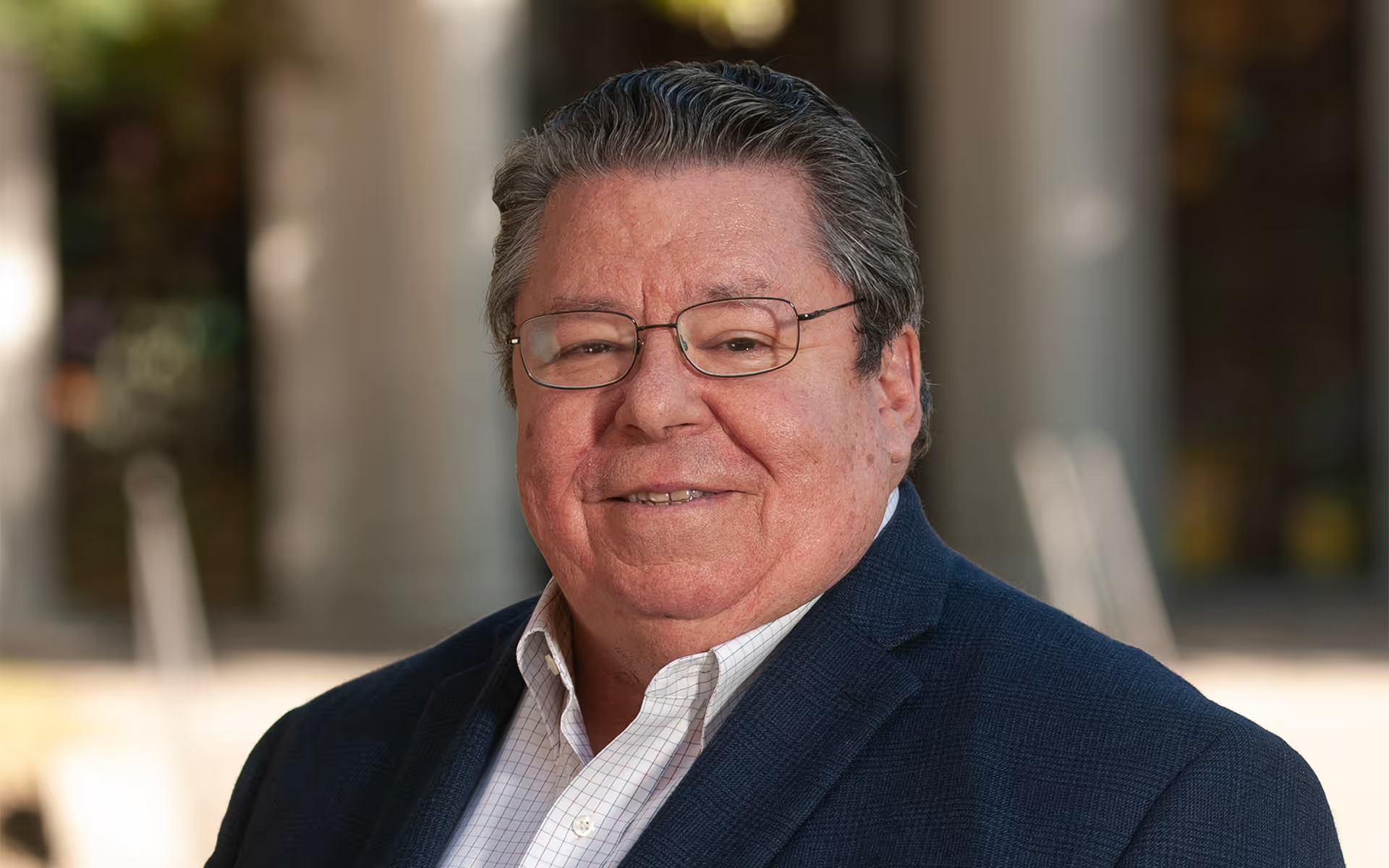
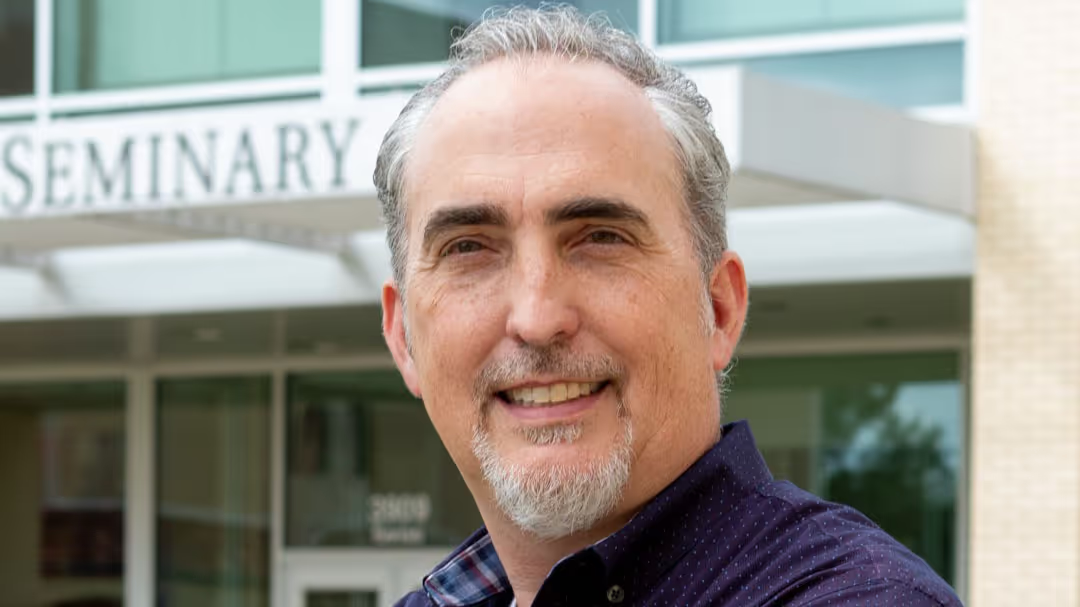
In the context of Dallas Theological Seminary’s centennial celebration, we invite you to the second part of our conversation withChancellor Mark Bailey (MB) and President Mark Yarbrough (MY), as they talk together about how they’ve seen the Lord guide the seminary and what the future of DTS might include.
In the context of Dallas Theological Seminary’s centennial celebration, we invite you to the second part of our conversation withChancellor Mark Bailey (MB) and President Mark Yarbrough (MY), as they talk together about how they’ve seen the Lord guide the seminary and what the future of DTS might include.
What are the challenges for any seminary as we look ahead to the next century?
MY: In some ways, there are always challenges, and that’s been true all along the way at Dallas Theological Seminary. Were there cultural challenges in 1924? Yes. But what I believe is unique about our current environment is the collapse of the Judeo-Christian worldview that the US previously had as a framework. That’s the first challenge we face for the next hundred years: secularization.
MB: Part of that is also the willingness of our culture toaccept a lie. Today we see an alignment of mutually contradictory viewpoints,and all of them oppose Christianity because of the exclusivity of Jesus Christ.Isaiah 5:20 warns against “those who call evil good and good evil,” and ofcourse we’ve watched our culture turn what’s wrong into right. But more recently, as Erwin Lutzer (ThM, 1967) reminded me, we have seen a further step:what’s right has become vilified as wrong. That’s a huge paradigm shift that isa challenge to seminaries and the church.
MY: I would say the second challenge is globalization—and that’s not a negative change, but it means we need to modify our methods. The growth of the church in the Global South is redefining the voice of the church.The writing of the church is now starting to come from other parts of the world, and in languages other than English. When people in my generation think about the leading voices in Christianity and pastors who have made a significant impact, many of those voices have come out of DTS. But we’re seeing this from a Western-centric perspective, and I don’t know if we’re yet fully aware of leading voices that are now coming out of the Global South and having tremendous impact all over the world—in theological education, discourse on systematic theology, church growth, church planting, and more. It’s a sea change that we find ourselves in.
Would you say, then, that one of the challenges for aUS-based seminary right now is to learn a proper humility? Is it a bit ofletting go of something that we used to feel we “controlled”?
MY: Yes, humility is a good way of putting it. I think it’s the age-old question of what can’t change and what must change.In responding to the current challenges we’re discussing here, there are somethings we can’t let go of—the orthodoxy of the faith. We can’t ever let go of the theological convictions that have guided DTS from the beginning. But finding our way in engaging with other people will require humility—and not to run from the discussion, but to engage without giving up the fundamentals of the faith.
MB: With globalization, DTS needs to take the initiative tobe a good partner but not dominate. We have a lot of resources, but leaders inother parts of the world have a passionate willingness to trust the HolySpirit, to pursue ministry without the resources. I believe the Spirit wantsthe church all over the world to work together. It’s not our purpose to developthe unity of the Spirit; our purpose is to discover the unity of theSpirit that God has already accomplished in Christ and by his Spirit, asEphesians 2 explains.
If you were going to start a seminary now, in 2024,knowing all that you know about the first century of Dallas TheologicalSeminary and all that has happened culturally in that century, what would that“new DTS” look like?
MB: In a lot of areas, we’d do the very things we are doing right now. In terms of the core identity of who we are, I don’t think we’d create anything different. The initiatives that Dr. Yarbrough is doing might be different; strategy is changeable. But theologically and biblically, we’d ensure the same commitments.
MY: I agree 100%. Our doctrinal convictions and core values would be the same. What might change would be the methodology. I always say that we hold firmly to our mission, but we hold loosely to our methodology.What I mean by that is that there’s a lot of freedom and flexibility in terms of methods. At DTS, we often try new methods, learn from our efforts, and then ask what that change does to the system. I think if DTS were starting now, we’d be more engaged in church partnerships, especially in the local church, for theological education.
I remember one time, some DTS faculty members asked Haddon Robinson (ThM, 1955) what he would change about theological education. He replied, “Well, I think I might change everything.” And then he clarified thathe was talking about the loss of flexibility—again, in the methods, not the mission. The larger and more institutionalized a school becomes, the more it loses the ability to be flexible, to say, “Let’s see where God is going and what he’s doing, so we can adapt.” We’re all creatures of habit. We like to teach the way we were taught. We’re comfortable in our own ways.
Talk about that value of flexibility, or agility. Is thata unique aspect of DTS as a seminary without denominational affiliation?
MY: That aspect of our identity does afford us some flexibility. But innate within any academic setting is the need for institutional buy-in. There’s safety that comes with that, and there’s also alack of agility that comes with that. A smaller institution can—generally speaking, but not always—address that need for agility in different ways from a larger institution with established committees and infrastructure and decision-making processes. As an institution grows larger, it takes more energy to get buy-in and even basic communication. That’s not good or bad; it’s just the way it is.
DTS has always been known for its beloved professors—first Lewis Sperry Chafer, and then people such as Stan Toussaint, Dwight Pentecost, and Howard Hendricks. Entering the school’s second century, there are fewer people who know those leaders and teachers of the past. How does that affect continuity?
MB: The books, recordings, and memories will continue to live on, and the new Legacy Center on the Dallas campus will help maintain the continuity. I think of the passages in Exodus and Deuteronomy, when God tells the Israelites what to pass on to their children. We’ll continue to refer to the writings of the past, finding connections to today. Those of us who have stories of being in the classroom with some of the great professors of the pastwill keep sharing them. And we’ll keep sharing the stories of encouragement and perseverance from DTS’s history, such as the $10,000 check that arrived at Dr.Chafer’s office at a pivotal moment. The key is to continue what we do, trusting God for each good moment. I remember listening to Don Geiger (ThM,1955), an alumnus who arrived at DTS while Dr. Chafer was still alive. Here’s the greatest thing I heard Don say: “People talk about ‘the golden years.’ We are in the golden years.” Here’s someone who knew Dr. Chafer personally, and Don said, “This is so much better than back then.” That was a huge encouragement!
MY: We’ve got a grand story to tell—a long history, with aunique longevity and continuity, sustained by the sovereign hand of God. When I arrived at DTS as a student, I had a list of professors I wanted to take classes from, regardless of what the classes were. In fact, in my first semester, I frustrated the registrar because I took all electives. I thought, “These guys might die! I don’t want to miss my opportunity!” (I took the last class Dr. Walvoord ever taught at DTS, but little did I know that Dr. Pentecost would continue teaching until he was ninety-nine years old!)
I’ve been traveling more than usual this year, speaking at a number of centennial alumni gatherings. After my presentation, I open it up fora time of Q&A. Inevitably, alumni will come to the microphone and ask, “Is such-and-such a prof still alive?” But here’s what’s fascinating: I also get questions from younger alumni which show me that “legends” are always being made. People who graduated within the past fifteen years have memories that are different from mine when I was a student here with my list of specific professors I wanted to study under. There are new moments, new buildings, different professors, and those alumni look back and say, “The Lord worked in my heart at that moment in that place.” The story of DTS is God’s story, a story of grace poured out on the school and its community.
MB: The DNA of DTS is deeper than any one of its leaders or professors. This goes back to the question of what shouldn’t change: our commitment to biblical authority and doctrinal fidelity, our gospel clarity, our ministry integrity, and our global intentionality. All of that is contained in our mission statement. I can’t imagine a better mission statement. It emphasizes glorifying God, equipping godly servant-leaders, proclaiming his Word, and building up the body of Christ worldwide. It shows the seminary’s priorities.Our commitment to that founding passion for the whole Word of God doesn’t change, and that allows flexibility in aspects of our method.
Dr. Yarbrough, you said earlier that “We like to teachthe way we were taught.” Introducing online education at DTS must have been abig change!
MY: The only time in my whole life that I almost told Dr. Bailey no was when he pitched online education to me and said, “I think this is what we need to do.”
MB: And later, when Dr. Yarbrough wanted to go even furtherin online education, I almost said no! [laughs]
MY: In decisions and plans such as entering the online education space, I would say we’ve just watched the favor of God. We have awise board, whom I treasure, and together we remain totally dependent upon the leading of the Lord. Some things I just can’t explain other than as the favorGod has poured out on us.
MB: There are moments of what I call “sovereign serendipity” as we’ve asked what God would lead us to do, given who we are and what we are. God put us in conversations we didn’t expect, and he blessed those conversations.Our first online course came about through a connection from Dr. Toussaint. He introduced us to a businessman in Hong Kong who wanted us to start a seminary extension there. This was in about 2001, and I remember a moment when the businessman asked me, “How much would an online class cost?” I said, “Well, about $100,000 per course.” He leaned over and whispered, “I’ll take two.” Out of that initial funding came our start in online education.
MY: That first investment got things going. Then around 2003, Dr. Bailey (then president) asked me to take the online education idea and run with it. We had just hired our first webmaster, John Dyer, and he built us a learning management platform that we used for the next fifteen years. So in 2006, our online courses were really getting started, and we could see what it could become. But we didn’t have the money it would take to make it all it could be. That original donor had stayed with us, and he really wanted to make online education flourish at DTS. He asked us to figure out how much it would cost. Our research told us that we would need $1.4 million—a huge number!
Now here’s the story: I’m out on the ball field coaching my oldest son in a baseball game. This donor starts texting my BlackBerry, telling me he really needs to know the exact dollar amount. I try reaching Dr. Bailey, but he’s not answering his phone. But the donor keeps texting, asking if he can have the number in the next twenty minutes. Do I really tell him the full amount? I’m standing at first base, and apparently I’m praying out loud without realizing it. A little kid from the other team arrives at first base and hears me praying. And he says to me, “God’s gonna give it to you—I know it!” Whether I should have or not, I took that as a sign. With a huge gulp, I text the donor “$1.4 million.” Shortly after, Dr. Bailey calls and says, “Well, did you give him the number?” (Another gulp.) “Ummm . . . yeah.” About ten minutes later, the donor calls again, and I’ll never forget his words: “I claim that project for the Lord Jesus.” And I can tell you, I wept out there on the ball field. The next morning, he wired the seminary $1.4 million. That enabled us to start online education at DTS, and our first course was “The Life of Christ on Earth” with Dr. Pentecost.
MB: So in response to the question about teaching in a new way, when the faculty saw that Dr. Pentecost was first out of the gate in this new method, nobody could say no after that!
We always talk about “stewardship of opportunity.” If God opens a door, will we respond and take the opportunity, as he leads? God has kept us so busy with these unlooked-for opportunities, we haven’t had a lot of time to sit around and say, “What would we dream about doing?”
About the Contributors