
The Theology of Escapism
In this episode, Drs. Darrell L. Bock and Kevin Gilliland discuss the theology of escapism, focusing on new phenomena of escapism.
Timecodes
- 00:15
- What is escapism?
- 07:46
- Helping people struggling with anxiety and escapism
- 11:09
- Escapism in the millennial generation
- 18:28
- Significance of neuroscience in understanding escapism
- 25:41
- What are some solutions to escapism?
- 33:30
- What are the benefits of journaling?
- 40:45
- Using the buddy system to deal with escapism
Resources
Transcript
- Darrell Bock
- Welcome to The Table, we discuss issues of God and culture. I’m Darrell Bock, executive director for cultural engagement at the Hendricks Center at Dallas Theological Seminary. And my guest is Kevin Gilliland, who is an adjunct professor in counseling, and has been around Dallas Seminary since –?
- Kevin Gilliland
- Yeah, let’s say ’92.
- Darrell Bock
- Okay, and also is executive director for Innovation 360, is that right?
- Kevin Gilliland
- That’s it, yep.
- Darrell Bock
- And our topic today is escapism. Which means, if you’re listening to this podcast, you’re probably escaping right now. And we’re interested in talking about things that people do to kind of get out of the routine of life, and yet at the same time things that people do that in the midst of that escape may or may not be serving them well. So it’s a kind of combination. So Kevin, talk a little bit about your counseling background, and how in the world did you get into this area of counseling?
- Kevin Gilliland
- Yeah, that’s a good question.
- Darrell Bock
- How did you escape to this field?
- Kevin Gilliland
- How did I escape to this, yeah. You know I go back, I’ve got a son who just graduated from Baylor, which is where I went, and I still remember having that conversation with the academic advisor in my freshman year, asking me what I was interested in. And I wasn’t sure what I was interested in, but I knew that I was not interested in math. And so she was like, “Well hey, how about psychology?” And I’m like, “Yeah, I like people, that works.” And it’s a good thing there’s a big God. And I really do, I ended up down that path, I ended up in graduate school at Rosemead, got my doctorate in clinical psychology. Finished up back here in Dallas, and there’s a couple areas I’ve done a lot of work in.
One of those has been addiction, so I’ve done some phase three trials with pharmaceutical companies for the FDA, looking at addiction medications. And then had a chance in some previous roles with the Johnson and Johnson pharmaceutical company and another company to be a medical liaison that just had a chance to talk to a lot of really wonderful men and women that devote their lives to studying addictions, and how we struggle sometimes. And to be able to hear and see how that’s done across the country. Some of those wonderful men and women also happen to be incredibly godly, deep people. Some happen to be brilliant, brilliant individuals that understand the body and neuroscience like I never will.
And so – but my desire has always been working with people that struggle. And so that’s sort of where I’ve landed, and you know, you’ve done this a while. If you’re lucky enough to fall in love with what you do, what a deal. I couldn’t have planned it, but I really, really enjoy it. So that’s sort of how I ended up in this niche of – and it does fit a little bit with how we escape, at times. We can do it in healthy ways and we can do it in ways that unravel us.
- Darrell Bock
- So let’s talk a little bit about that, ‘cause I assume that you didn’t hang up your shingle initially and say, “Counselor in escapism” or something like that. So how did you kind of navigate your way into this particular space?
- Kevin Gilliland
- Yeah, it’s – and at its worse, I think when humans struggle with escaping – and you really have to come back and go, “Okay, so what are we talking about and why do we do it as humans?” And its extreme case I think is what you see where you see some addictions. You see some severe depressive episodes or anxiety and – so in its worst forms, it’s there. But the really troubling part is there are much greater numbers that struggle with escaping in little ways that still have a real negative impact on our spiritual life, our relational life, and our physical life. And I think that’s where, when you see what it looks like in its extreme, I think you’re in a better place to notice it in its subtleties in life.
- Darrell Bock
- Interesting, so I’m assuming that what happened is, is that you started doing counseling and this topic just kind of repeatedly popped up in one way or another?
- Kevin Gilliland
- Yeah, I think it’s probably – who knows? The short answer, who knows, but it’s one of those things that you have your tribe, right. You’ve written a few books in your day. Is it Luke, the commentary?
- Darrell Bock
- Yeah.
- Kevin Gilliland
- Okay, why Luke? You know, like I don’t know if I picked Luke or Luke picked me. You know, and so I think it’s the same –
- Darrell Bock
- Well I can actually tell my story, but that’s a –
- Kevin Gilliland
- That’s funny. But you know what I mean. You know, how did I end up teaching this course or writing this book? I’m not sure if I picked it or it picked me. And I think that speaks to, for me, how God so directs and orients our path in ways I don’t think we’ll fully fathom until later. But I think some of it was, I picked this, and some of it was it picked me. And I think there’s that piece of it that, you settle in to certain struggles, and they’re easier for you to help people with than other struggles. And I think this, for whatever reasons, was a struggle that I saw people having that was easier for me to understand, relate to, step in to, than other struggles.
- Darrell Bock
- So – I’m gonna try one more time, see what happens. So I take it what happens is you’re in general doing the kind of counseling that counselors do, and this consistently – like I would call Whack-a-Mole, just consistently popped up, and all of a sudden you realized, “Hey, I better take a harder look at what is involved here”? Or did you actually prepare to do this coming in?
- Kevin Gilliland
- No, I didn’t prepare to do this coming in. I think I stepped into – I went to Rosemead for graduate school, and in the course of all of those subjects, I took a class on addictions. And in the most extreme form of escapism, no question, drugs, alcohol, food, sex, they give us humans trouble. But in they’re milder and more moderate forms I think are some of the things we’re gonna talk about.
And so having that class and taking that class and sitting in, we also had to go to an AA meeting. Never been to an AA meeting in my life, and I go to that as a student and I ask students to do that now when I teach, and I do adjunct here as well as SMU. Whenever I have students do that, they come back saying the same thing. When I listen to them talk about community and relationship and grace and forgiveness, I think that resonated with my spiritual beliefs and anchoring. I think that was probably a piece for me that really drew me, was that especially in AA meetings, say what you want about it and we can debate it all we want, but it’s unmistakably gracious and welcoming to people that have struggled in such a terrible way that they’ve hurt some of the most meaningful people in their lives. And to be able to have a place where there’s not condemnation for them to step in and wrestle and struggle and try to change their life is a remarkable thing.
- Darrell Bock
- I may be going at this backwards, but isn’t one of the things that makes AA so attractive is that in the midst of the acceptance, there comes an environment where you can successfully challenge the way people live and the way they go about it, and sustain them in the midst of it? Which seems like the opposite of the way we normally think about it, don’t you have to really confront them and dig in and that kind of thing? I mean, what’s your take on that as a counselor?
- Kevin Gilliland
- Yeah, that’s really – when we know people care about us for no other sort of alternative reason, but genuinely care about us and want to help us with some basic needs, we’ll allow them to have conversations with us that we won’t allow other people to have. We’re invited in, if you will. I’m not trespassing. I don’t have a right to tell you what I think about you and your life, but if I care for you and I’m willing to step in with you in such a horrible time in your life, and we continue to do that a little bit, then there’s going to be a space that I have some relational element that I can begin to speak to you about things that I see and know and think I may know in your struggle. Because it’s been my struggle, if you will.
I think sometimes Christians, we miss that. We think, “Oh, I’m a believer, you’re a believer. Hey, let me share with you what I see.” You have no relational investment with me. And so you’re running a real risk that it simply comes across as harsh, judgmental, and unloving. But in the right context, that right word about our behavior and struggles, boy, that’s just, it’s the word of God, really. It just happened to be carried through you. So it’s a long answer to, I think – did that answer your question?
- Darrell Bock
- Yeah, no, it did, very much so. ‘Cause I think sometimes we underestimate the power of Christ and acceptance.
- Kevin Gilliland
- Oh my goodness. Yeah, I’ve just been reading Bonhoeffer, Dietrich Bonhoeffer lately, he talks about community. And one of the things he says is, first, don’t tell people about your Scripture. And then second, the first thing you should do is just listen and be present. We often undervalue the significance of being with people. And if we can be with people and we can bear their burdens, then we have a chance to talk about the most impactful thing in this world, which is the word of God. But it will be rightly placed, appropriately placed, so that it’ll give grace. Not judgment, but grace. ‘Cause it’s in the presence of Grace that we make significant changes in our life. It feels very different.
- Darrell Bock
- Yeah, cultural engagement’s very much the same kind of thing. I tell people, people will not care about your critique unless they know you care. I mean, it’s pretty simple, really.
- Kevin Gilliland
- Yeah, I can’t agree more. So I think initially, that probably was something that – I don’t know what thoughts I had about what AA looked like, but I was really struck by that grace and that love and compassion. But then also, the ability to speak the truth in a way that seemed harsh but wasn’t. Was incredibly loving.
- Darrell Bock
- Yeah, I can accept something, even hard words, from a friend who I know is a friend. I mean it’s just that simple. Well let’s talk about escapism here a little bit. I’ve been told – I have a lot of millennials on my staff, and they are all thrilled we are doing this podcast. Because I guess in their minds, they think with the advent of things like Netflix and that kind of thing, that the ability to escape and to do so what somewhat addictively in ways that damage us is a common trait, especially of their generation. Which struck me, I can’t pretend to be a millennial, I’m way beyond that in terms of age, but it struck me, their interest in this topic, because it does seem that there’s a lot more potential ways that we can escape today than perhaps we used to. I mean, you know, you get the old standards, you mentioned them to begin with. But now there are lots of other, more subtle ways to escape. So what do you see?
- Kevin Gilliland
- Yeah, like you, I’m not quite a millennial. They occasionally invite me for a tour, so I see the land that is the millennial, and I love it. I love them as a group for what they’re helping us to see. But I do agree. We’re still learning to use technology. We just simply don’t have the maturity to use it well. And I make that as a blanket statement about humans, and so when we look at the escapism, well first, I guess, sort of as full disclosure, I have absolutely binge-watched series before. I love it, and it’s great fun. I won’t say what series –
but we’ll just leave it at, I have partaken of said binge watching of series.
- Darrell Bock
- I’ve done it once with my millennial kids present, encouraging me.
- Kevin Gilliland
- Yeah, I’ve been drug on trips with that too, yes. Now what I would say though, is especially for us to be mindful, is so when does binge watching a series go from something that may be relaxing, may be refreshing, and when does it become something that is problematic? And what we see is, when we ask it to do something for us, we’re taking a step down a path that may be problematic. For instance, if – and we almost always end up in that escapism when we’re trying to manage life. Or a stressful time, a difficult time, a challenging time, either emotionally or physically. Or at work, financially. And it’s how do we manage the stress, the anxiety, the mood, that’s related to that? And we look for ways to do that, as humans.
Well, binge watching or just watching TV and checking out, or sitting and scrolling through Facebook or Instagram, or – now I’ve instantly dated myself. You listeners are going, “That dude’s over 50, I know.”
- Darrell Bock
- And you’re messing with all kinds of people now.
- Kevin Gilliland
- I am, I’m just gonna throw, whether a Snapchat, or what – I’m fine with all of that. But what happens is, we tend to overinvest in it because we’re asking it to help us forget about the stress in this relationship. Or my anxiety and fear about work. Or, whatever it is. My health issues, that I’m asking it to relax me, to help deal with the difficult relationship. And it can’t do that. And so that’s where I think those things begin to cause problems for us. Our problem, likewise, whether it’s Netflix or wine or these new craft beers that the millennials love, there’s nothing wrong with alcohol. There’s nothing wrong with Netflix, there’s nothing wrong with food. But when we begin to ask it to do something for us, or when we’re struggling in a difficult chapter of life, we tend to be impulsive. We tend to be thoughtless, and we tend to struggle with those things that were at other times in our life, that we do without thinking about it.
You know, I was just talking to somebody earlier about, by and large, on average, I tend to eat healthy. But as you can hear in my throat, I had strep throat last week, and really – I hope I never get it that bad again. But for the past eight or nine days, I’ve eaten terrible. I mean, I’ve made – I just haven’t eaten good food. And I look at that and I go, “Yeah, I’m physically not feeling well. Mentally, I’m struggling a little bit because I can’t be at the office, and I know I’m not able to, I feel like I’m getting behind.” So I’m psychologically and physically not at my best. Is it a surprise that I ate so poorly, so out of character? No, it’s not.
Now what’s important is, okay, I don’t want to overreact to that, and I have to see it for what it is. And then I have to look at, okay, I gotta step back into a different place. Because it doesn’t matter how much what you eat or how many carbs you eat, you’re not gonna get rid of the anxiety about feeling the way you do, and not being able to do the normal things in life. Right, your energy is down, so you don’t even feel like studying or reading or doing those habits that you love. Make sense?
- Darrell Bock
- So what you’re saying to me is, is that although we view it as an escape, there actually is no escape, in one sense. In other words, to go to a place to try and nullify or numb or forget the circumstances that you’re in doesn’t actually help you deal and cope with the circumstances that you’re in.
- Kevin Gilliland
- In some cases, yes, absolutely. We tend to hope that’s the case, right, ‘cause I’d rather have a couple glasses of wine with my wife tonight when I get home and we have dinner, and that we won’t have to go through the messiness of why she got mad at me and what I said back and then what we – hopefully we can just have a couple glasses of wine and, “Okay, are we good?” “Yeah, we’re good.” And you’re like, well, when you been married a while, you realize, no, we’re gonna have to talk through some things. That wine’s not gonna make it go away.
And there are healthy ways we can sort of refresh or sort through things, and there are ways that are really unhealthy. Those quick things, unfortunately, like Netflix, Facebook, Instagram, Snapchat, all that social media, food, alcohol, all of those things, are very quick. They’re immediate. I don’t have to use a lot of thought for them. And, some of those physically are very powerful. And so you go, “Wow, it’s – eating right and exercising is never going to be as immediately rewarding as pizza.” It’s just not.
- Darrell Bock
- [Laughs] Yeah, exercising is just no fun.
- Kevin Gilliland
- You’re like, “Wow.” Now will I see the long-term benefits and daily –? Yes. But when we’re struggling, it’s hard not to get quote “lost in those things.” Beyond the point at which they may be beneficial. Does that make sense?
- Darrell Bock
- Yeah, it does. Now you mentioned neuroscience, which I think sometimes people go, “What does that have to do with anything?” I mean, I barely what a neuron is, so help us explain kind of why that’s a part of this conversation.
- Kevin Gilliland
- Well, much to my disappointment, our mind and our body is unfortunately forever connected. As much as I would like to treat my body recklessly and deprive it of sleep and nutrients and healthy things and still be able to function mentally and spiritually at my best, you just simply can’t. And so on this side of heaven, we are trapped in these bodies of ours, and that means, how do I attend to my basic needs? Because where my body goes, my mind will follow, and vice versa. Where my mind goes, my body often follows.
I spent some time a couple of weeks ago with a young man that was college, great young man, and getting ready for finals, doing graduate work. And he stretched his physical being beyond its limits, and so that means not enough sleep, too much caffeine, not enough food, and over the course of a couple of weeks, really lost the ability at making good judgment and good decisions. Literally, like to the point of not going to class, not – friends were concerned, like this is not normal. And you go, “Yeah, we can only do so much with our bodies and not expect to have mental, psychological, and emotional consequences.” And we do that all the time.
And so when you say neurons and neurochemistry, we’re woven together in such a way that the fascinating creation that is our mind and our bodies, I don’t know why we send a rover to mars when our minds and our bodies are so wonderfully created and crafted. We stretch them beyond what they’re able to, and we suffer the consequences. And so when you look at some of the things that are good for us, some of the things we escape into are not good for us. Like Netflix and social media, we end up very isolated. And disconnected from other people, and at our core we’re created in such a way to be in relationship. We are relational beings. We are relational, spiritual beings, and when we isolate, humans don’t do well. Just look at history. There’s a long history of it.
And when we don’t take care of the physical part of us, our minds don’t function the way they need to. And we need food, we need sleep. It helps us be who we desire to be, and we simply can’t treat it in a way that neglects that. I don’t know if you’ve seen, I just watched a fascinating documentary called Becoming Warren Buffett. It’s fascinating. But one of the first things he starts with is, he’s actually speaking to a group of high school students, and he said, “What if I gave you, and told you I was gonna give you a brand new car after this, but the only catch is, this is the only car you’re gonna have the rest of your life. But you can have anything you want.” And you can see these poor high school kids light up like, “He could do that.” And he said, “The only catch is, it’s the only car you’ll have for the rest of your life. Now my question to you is, how are you gonna treat that car?” And you can just see, wow, if that’s the case, and I get the car of my dreams, how am I gonna treat that? And he said, “That’s your body. That’s your mind. You get one of them. I know you don’t think it now, but you need to act like it’s the only one you’re gonna get.” And I thought, it’s such incredible theological wisdom as well as natural wisdom of, yeah, that has an impact on how I do.
- Darrell Bock
- And we were talking about neuroscience, let’s talk a little bit about how that works. Because you said our bodies are connected, but I take it that part of what happens is, is that, if I can say it this way, escapism can feed itself. Is that true?
- Kevin Gilliland
- Yeah.
- Darrell Bock
- And that our bodies react in such a way that it can actually make matters worse rather than better? How does that work?
- Kevin Gilliland
- Yeah, without boring everyone about neuroscience, it is, I think it was the 2000s that were the decade of the brain. We now have an ability to look at how our brain works and functions in ways that really are just remarkable. And we know that our brains work on electricity and neurotransmitters. Everybody knows what dopamine is. It’s the feel good emotion. Well, we’re woven together in such a way that when we step into activities that are pleasurable and rewarding and we need to repeat, we have a release of pleasurable chemicals. That’s how it’s supposed to work. So we remember that and we do it again. Likewise, those things that aren’t pleasurable and rewarding and good for us have a negative effect on us.
And so, when we step into things like Netflix or alcohol or food or social media, we do release chemicals. We’re always releasing chemicals. And sometimes we can do that in a way that’s artificial. Like alcohol, and food for instance. Food, it releases really important chemicals that regulate our mood. It’s more than just nutrition for our bodies, it also releases chemicals for our brains as well. And so there are activities we step into and engage in that artificially release those chemicals. Alcohol is a great example, but the same thing takes place, whether it’s watching movies or in social media or gaming, that you’ll see people do it for hours, is that you’re artificially releasing all of these chemicals that are in amounts above what they normally should be, and are over a period of time that are longer than they should be.
I’ve read an article here recently about someone that – a young man that died from caffeine. Increased amounts of caffeine, and there was somebody at a gaming conference here not long ago that died as well. You hear about those things, of – and those are typically outliers. I’m not saying you’re gonna die from gaming. But what it does remind you is that you can step into those activities, artificially release these chemicals, that you get lost. That it sort of is this negatively rewarding activity that you go back to, because it’s easy.
Exercise is rewarding and good for the body, but not in the same amounts as eating Krispy Kreme donuts. Nothing against Krispy Kreme donuts, I love them, but eating them in large volumes every day is not good for me. But that’s easier than doing those things that are good for me, that give me a break and allow me to escape in a healthy way.
- Darrell Bock
- So I’ve heard you use exercise a lot, so I take it exercise is one of the solutions to this problem, and proper diet is another solution to this problem? I mean, what – someone comes in and says, you know, I’ve got this problem, how do you break that down for them?
- Kevin Gilliland
- Yeah, you know, and when you do talk to people, they – and again, you don’t have, and people that are struggling sort of with escapism, whether it’s Netflix or gaming or social media, you probably still have a job. You probably, your relationships are probably still going okay. But you know something’s off. You just know, yeah, I’m not my normal self. And that almost always means we’re starting to isolate more. We’ve kind of withdrawn from things that we used to stay plugged into, and that this activity sort of becomes the center that the rest of my life rotates around.
- Darrell Bock
- It’s like this growing amoeba that takes up more and more of your life.
- Kevin Gilliland
- Yes, and you plan your day around it, and you kind of look forward to it, and it does start to hurt relationships. And it may start to impact work, because you’re staying up late at night, now you’re tired, you’re not at your best. You’re just not. And so there’s an element of that that you start just asking some of those basic questions of, okay, tell me how are you doing in your relationships? What are you doing that you still enjoy and love, and that sort of fills you with excitement about life?
I get the Netflix, again, I’m not opposed to Netflix or gaming. But when it’s doing more than it should in your life, that’s when it starts to be problematic. And so looking at those other aspects – I do some work at Cooper Clinic, and I love, Doctor Cooper talks all the time about being active. And that’s different than exercising. But our bodies were built to be in motion. We’re wrestling with the technology piece, because it really leans the other way from that. And so one of the things I talk about is, what are you doing to keep your body in motion? We’re athletes. If you have a body, you’re an athlete.
- Darrell Bock
- So you’re talking about being engaged physically in life?
- Kevin Gilliland
- What are you doing physically, and that’s – another gentleman, Todd Whitthorne, who’s just brilliant at nutrition and change. He talks about, walk your dog even if you don’t have one. And what he’s saying get is, these bodies are meant –
- Darrell Bock
- I’d like to see that. [Laughs]
- Kevin Gilliland
- Yeah, isn’t it great? We’re meant to move, and so when we isolate or escape, oftentimes we choose things where we physically just aren’t moving. And so you look at, how do you physically move? And then second, what are you doing to connect with people in meaningful ways? Because we often look at escapism, and where it becomes problematic is especially when it’s isolating. Now, just because you’re gaming with somebody in Seattle and in Quebec and in Miami does not mean you are interacting with people. I hate to irritate your audience, but you actually need to be with and see people.
And that sometimes can be really relaxing and refreshing, and allowing us to take a break from the demands or struggles or whatever it is that we just feel like we need to get a break from. And getting a break from doesn’t always mean mindlessly stepping into gaming or Netflix or – there are a lot of great ways to get lost, or to just take a break from the demands of life. Whether you’re a mom with young kids that no longer is working and talking to adults, or you’re a business guy that just got promoted, or you’re a young adult that’s stepping into a new career. Life gets difficult, and the things I look for when I start talking to people are, okay, are you isolating, are you trying to go against the laws of nature? Your body needs seven or eight hours to recharge. You can’t run your car without gas or electricity, whatever you have. Your iPhone is gonna die after a certain amount of time, and if you think it’s that spectacular, why does it need to be recharged? Our bodies are the same. So are you trying to defy the laws of nature by stretching it too thin and not sleeping and not nourishing and eating well?
So those are some of the first things I look at, because they can have some of the most dramatic impact. And then to look at, relationally, what are you doing to connect?
- Darrell Bock
- So, do you work through having people articulate what’s happening to them in the midst of their escapism? So they kind of become aware of the damage they may be subtly doing to themselves?
- Kevin Gilliland
- Yeah, and it’s really just inviting the conversation of, “Okay, is it working? Is it still working?” Again, I enjoy watching movies. But you’re on your third or fourth one, do you still feel relaxed? Do you still feel, or has it started to whip around the other direction to where, yeah, it’s not relaxing anymore? I keep going at it thinking it’s going – but it’s not. Okay, well what are you looking for, what are you asking it to do? And whether that’s feeling rested, “I just need to rest.” Take a nap.
I mean there’s a lot of things – I mean, I’m okay with a movie.
- Darrell Bock
- Some old things work, right?
- Kevin Gilliland
- Yeah, I mean, old things are new again. But it’s, how do you look at, if we were to look at your life, and we looked over the past week or two and said, “Okay, how are you dealing with this new job or this about to be married, or whatever it is,” and you go, “okay, how are you dealing with that, ‘cause that’s hard, it’s difficult.” Can we have that conversation? Yes. Okay, how are you managing that well. And if your answer is repeatedly gaming or Netflix, you’re like, “Huh, I think you might be overplaying that hand. It’s not gonna be able to do that much.” So I’m okay with you doing that one night or a couple nights, or – how can you look at changing and adding a couple of things that are different? Whether that’s – and I always look for things that you can kill two birds with one stone. If you’re gonna start to be active, go to a class of some sort. We’re creatures of habit. If you go to a Yoga class at 6:00 on Monday, you’re gonna have a good friend within a month, because everybody’s gonna go Monday at 6:00, all the same people. And so you go, okay, how can you incorporate some of those things together that you start to find some relationships that are relaxing for you?
Or whatever it is that you find that is meaningful for you. It may be reading literature, fiction, or history. Great, weave that into some of the things that you’re looking at. And then the one thing that we don’t do that is incredibly refreshing for us and energizing is when we just sit for a little bit of time to be thoughtful about our day. What do I want to do? What am I wrestling with? What are my priorities? If I don’t slow enough and look at whatever the issue is, I’m really never gonna tease out an answer.
It kind of used to be a mistaken notion of what we thought about anxiety. If you’re afraid of flying, well just don’t think about flying. Well then you end up not flying, and then the world gets to be really small. Instead, spend some time looking at it. What is it that I’m wanting to escape from, and how can I maybe think about it differently, be more thoughtful about it, more prayerful, as I’m sitting with God and being quiet with God, or reading the word. How do I allow those things to be woven into that time? But if I don’t create any space to reflect and think on it, then you’re probably not gonna unpack it.
And that’s sometimes what people do by coming to see somebody like me, or a counselor or a therapist is, that oftentimes is the first time you’ve slowed down enough to go, “What are you trying to do?”
- Darrell Bock
- You’re listening to a voice and bouncing it off as a way to try and get to a point of processing. Do you encourage – it just struck me in talking about the quiet time and the reflective time, do you encourage journaling at all and that kind of thing?
- Kevin Gilliland
- I do, I absolutely – I love it. Now people, you talk about lightning rod, you almost feel like you told someone, “Hey, do homework.” They’re like, “Oh, settle down, settle down.” Look, just capture some of your thoughts. Because I think what’s so fascinating about journaling – I recommend it, for some people it’s great, for others they don’t like it. But what I think it helps us do is it helps us to have perspective on our life. And we start to see that, “Well, I have seasons where I struggle, and seasons when I do well.” And these seasons are gonna come and go.
I wrote a book last year that’s kind of just a collection of a lot of the things we talk about as therapists, and with people that are struggling. And it’s called Struggle Well, Live Well. Because we’re gonna struggle, but when I do, I want to struggle well. And then I also want to live well. And so there’s a piece of that I talk about journaling that helps us see that. And so whether it’s just a freeform, I’m just gonna jot my thoughts – I picked up a colleague of mine was talking about, the ten year journal. And it’s spectacular. I actually picked one up. It’s only got about three lines on each year, but you in essence open a page like in a book, and on the left it says – what’s today? It says, “Tuesday the 30th, 2007.” But I can look write above it and see 2006. What was I doing on this day last year? And the year before? And just little things, like whether it’s I went to see the new Guardians of the Galaxy with my kids. Or my son’s graduation, or doing a podcast with you. Or some other more meaningful, deeper, wrestling personally. I might jot a note or two, but I love it ‘cause it’s only two or three lines. And it allows me to see these seasons of my life.
‘Cause our lives, I think, at times, we’re like little kids that keep bugging our parents to make a mark on the doorjamb. Have I grown, am I taller? And what you get with that is, well one, frustrated parents, but two, you start to get some perspective over time. And I think perspective over time helps us to see our struggles differently. And informs those times when we feel the need to escape, and to replenish and restore and that we need other people helping us.
- Darrell Bock
- Yeah, I almost feel like journaling is kind of a way of having a conversation with yourself.
- Kevin Gilliland
- Oh, absolutely. Absolutely. And when we struggle and want to escape, we need our best thinking. And our best thinking is not quietly bouncing around an idea like a pinball. And so it doesn’t matter how you get it out, whether you write it in a journal, you talk to a friend – and you need the right kind of friends. Not someone that’s gonna tell you you can do anything, and someone that’s gonna lecture you, but someone that can just listen and go, “Wow, yeah, man I don’t know. But I appreciate you sharing that.” Now I feel like I got room to keep talking. And if I keep talking, I’m gonna think and see my situation differently.
And you’re absolutely right, I think journaling does that for us. We see, when we write our thoughts down – you’ve written a book. When we write our thoughts out, it’s a very different experience.
- Darrell Bock
- And it can be revealing. I mean it – I fly a lot, I travel a lot, and there are times on the plane where I just sit and I’m reflecting on either what I’m getting ready to do or what I’ve just done, and I’m wrestling with processing what was positive and what was negative about that, that kind of thing. What do I think I’ve learned from what has taken place. You know, some really just basic core questions that allow me to be – to do some self-assessment. And it’s critical without being damaging, if I can make that distinction.
- Kevin Gilliland
- I love that. That’s a great way to say it.
- Darrell Bock
- Yeah, it’s an assessment, but it’s not designed to tear down. It’s exactly designed to assess. And in the midst of that, you discover things about yourself. What you like, what you didn’t like, what you would repeat, what you wouldn’t repeat. Those kinds of things.
- Kevin Gilliland
- And you start to see patterns. You’re like, “Wow, I have always struggled with worry. I didn’t realize that.” You know, I’d love to say I started journaling ‘cause I work in this field and yada, yada, yada, it would not be true. My wife, especially for the past 10, 12 years, was like, “You really need to journal.” And I’m hit or miss with it. But starting about eight, ten years ago, I’ve become more regular at it. I think part of it is, you have to do it long enough to see the fruits of it. And that is a – it doesn’t bear fruit the first season. You’re like, “No, keep writing, keep writing.” You’re like, “Wow.”
That’s what I love about the 10-year journal, is you see these little markers, and it’s what Facebook is trying to do with the photos of, “Here’s where you were last year, or two years ago.” Journaling does the same thing, except you see your psychology and spirituality. You see that growth. It’s the equivalent of that Facebook, “Here’s a photo of where you were.” I love it. I really, yeah, it’s –
- Darrell Bock
- Interesting. So I take it that one of the ways out of this escapism, if I can – I’m gonna be an irony in this – is to escape from the escapism, and to actually face the life that you’re being dealt with.
- Kevin Gilliland
- Yeah, and it’s really to ask the difficult question of, is it really still helping you? Is it still doing what it said it would do? And almost everybody that I talk to about that is pretty quick to go, “No, it’s just not. It’s not pleasurable like it used to be.”
- Darrell Bock
- And I tell you, this is the way out of almost any addiction. Am I right about that?
- Kevin Gilliland
- Yeah, and I’m not even saying that Netflix or social media is an addiction. But I think what it becomes is such a significant escape that we’ve, haven’t stopped to just step back and critically go, “Hey, okay, is it still really enjoyable? Is it still at a place that’s manageable in my life?” And if it is, great. But if it’s not, then you’ve gotta begin to look at, what do I need to do differently then? How do I need to step into this differently? Because there are certain things it’s not gonna be able to do for me.
But it’s being able and willing to ask those difficult questions. ‘Cause that’s a hard conversation. If you’ve been using the electronics for escapism, asking the simple question of, “Is it really still working for you” is a real threatening thing. Because I may realize this isn’t good for me, but I don’t know what else to do.
- Darrell Bock
- I don’t know what’s next.
- Kevin Gilliland
- And humans are funny, we’ll keep doing stuff that we know is not good for us if we don’t know what plan to take, or we don’t believe that it’ll work.
- Darrell Bock
- Okay, so I ask the question, “Is it still working for me,” and my answer is no, it isn’t. Now what do I do?
- Kevin Gilliland
- Yeah, now how do I get out of this? I’d go back with the age-old spiritual, theological principle, which is the buddy system. Life gets a lot easier when I’ve got somebody else helping me with it. For much of the same reasons that you talk about journaling, and I would say go back to the things that have been good for you in the past. If reading through Oswald Chambers, or reading through a psalm has been something in the past for you that’s been really good, go back to it.
There’s a lady I’ve been working with at Innovation 360 here recently that, really wonderful, godly woman that’s just going through a difficult season of her life. And I was talking to her about this. She was like, “Oh, I love reading the Psalms.” I was like, “I want you to go back to that for me. Just kind of go back to that.” She also used to be really physically active, I’m like, “I want you to go back to that too. Let’s just do it for a week and see what happens.” Because it used to be good for her, and she – I saw her about a week later, and she was like, “Oh, I just love that. I’d forgotten what that does to nourish me and replenish me. And, I didn’t believe that it could do for me what the social media is doing for me.” I know, it’s the lies that all of those escapes tell us.
And so I would say, have a conversation with somebody. It doesn’t always have to be a therapist. I’d take a good friend over a therapist any day of the week. Now I love what I get to do in life, but a good therapist will be with you for a season. A good friend will be with you for a lifetime. And they’re the kind of person you can step into that conversation with, and know you don’t have to defend and argue. You can just share.
- Darrell Bock
- They know you.
- Kevin Gilliland
- They know you. It’s where you’re known, and you know. And so I would say it gets easier when you reach out and connect with that one person, or one or two people. Family aren’t always the best. Especially parents, we get real crazy and nutty and anxious. We’re driven by fear more than we are by how big our God is. And I think that’s a wrestle for us, but so family’s not always – it may be for certain people in certain seasons. If you can reach out to somebody. But that’s the wonderful thing about being a believer, is that we always have the spirit and the word and God that loves us, and is intimately acquainted with the details of our life in ways that we can’t fathom.
And so we can sometimes make a step back into those things that are significant and meaningful for us, and they will open doors and lead us to a place that we’ll be shocked at when we look back in a month or two months. You know, we don’t – one of the things I talk about a lot is when I do some – we do Facebook live, and one of the things I talk about is marginal gains, and one percent change. Look, if you can this week, and you’re struggling with social media or escaping into gaming, if you can look at doing just one percent different this week, do that. Just do one percent different today. You know what, I’m gonna spend one less hour doing this, or I’m gonna – actually, I’m gonna take and spend 30 minutes doing this instead of that. If I just look at changing one percent –
- Darrell Bock
- Shrink the amoeba. [Laughs]
- Kevin Gilliland
- Yeah, just small things have dramatic impacts in our life. That’s why whenever I talk about quiet time or reading a Psalm, you know, everybody wants to be a monk. You’re like, “Ah, I can’t do that for four hours.” I’m like, I didn’t ask you to do it for four hours. But can you do it for four minutes? And four minutes may seem like a lifetime, so you know what, go with – there’s so many apps today. Go with a verse of the day or a quote of the day by some of these wonderful godly men and women. Start with that, and see where that grows to. That one percent. Do you think you could do that, do you think you could look at – I get, I love CS Lewis. So I get a quote a day of CS Lewis’s. And it usually takes me four days to understand what he said, but it’s – I can’t tell you how many paths that’s led me down that I never anticipated. That I’ll go and read this, or look at that, or check into this, or read some part of history that he’s referencing that – and so you go, “Okay, just one percent. Can you do one percent?” And that’s the space that I would say is, it’s not as big as it feels. The escape that you’ve – when you find yourself off the path trying to get away from life, if you can just recognize, “Okay, this isn’t doing what it used to do for me, how do I get out? I’m gonna talk to somebody, or I’m gonna go back to God.”
- Darrell Bock
- Well, Kevin, I thank you for coming in and helping us think through escaping and kind of recapturing ourselves, recapture our soul in the process, and hopefully some of this self-reflection that you’ve caused people, and exercising, and taking care of our bodies, getting our sleep, that some of these approaches – drawing near to a friend, drawing near to the word of God will help us. We thank you for being part of the Table, and we hope you’ll join us again soon.
About the Contributors
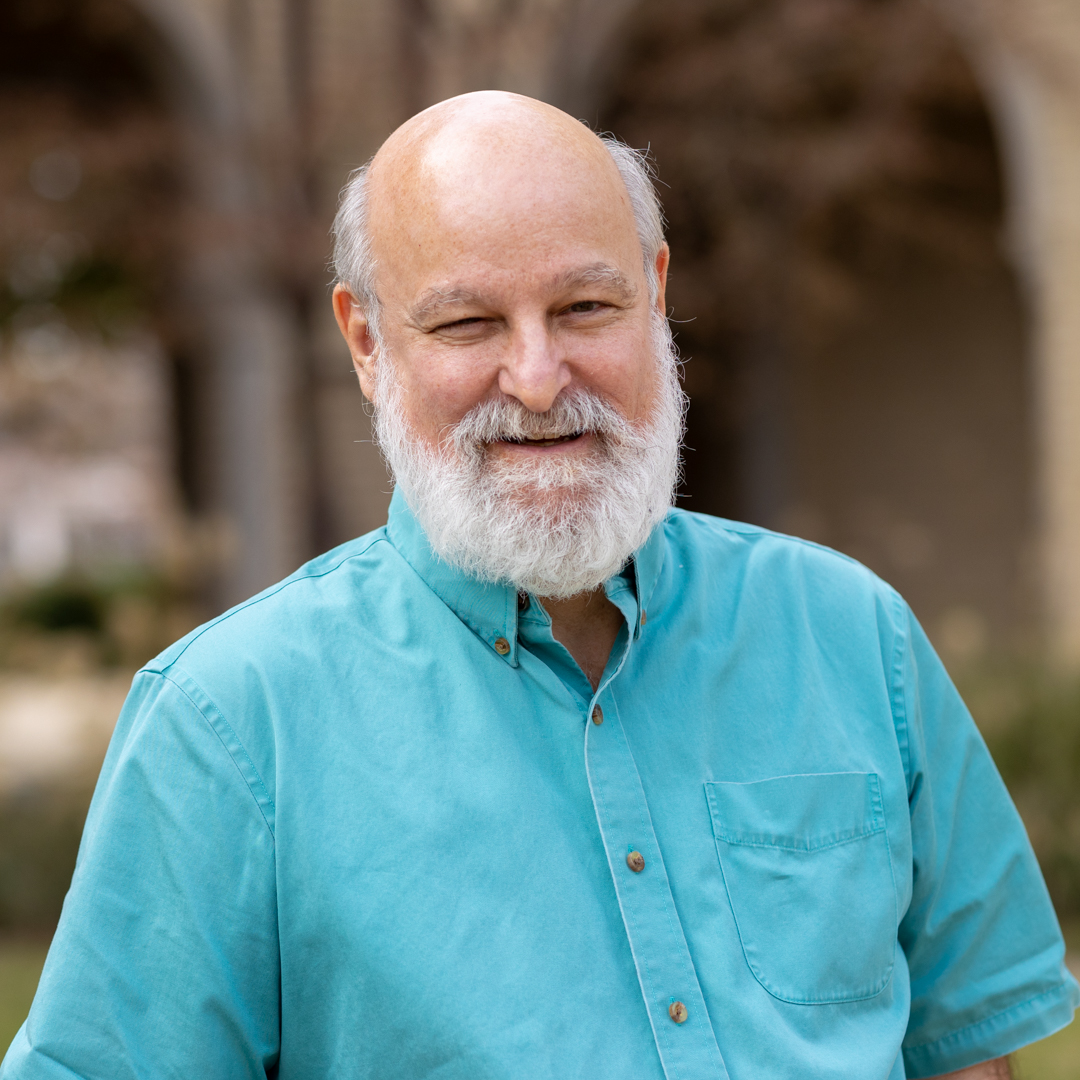
Darrell L. Bock
Dr. Bock has earned recognition as a Humboldt Scholar (Tübingen University in Germany), is the author or editor of over 45 books, including well-regarded commentaries on Luke and Acts and studies of the historical Jesus, and works in cultural engagement as host of the seminary’s Table Podcast. He was president of the Evangelical Theological Society (ETS) from 2000–2001, has served as a consulting editor for Christianity Today, and serves on the boards of Wheaton College, Chosen People Ministries, the Hope Center, Christians in Public Service, and the Institute for Global Engagement. His articles appear in leading publications, and he often is an expert for the media on NT issues. Dr. Bock has been a New York Times best-selling author in nonfiction; serves as a staff consultant for Bent Tree Fellowship Church in Carrollton, TX; and is elder emeritus at Trinity Fellowship Church in Dallas. When traveling overseas, he will tune into the current game involving his favorite teams from Houston—live—even in the wee hours of the morning. Married for 49 years to Sally, he is a proud father of two daughters and a son and is also a grandfather of five.
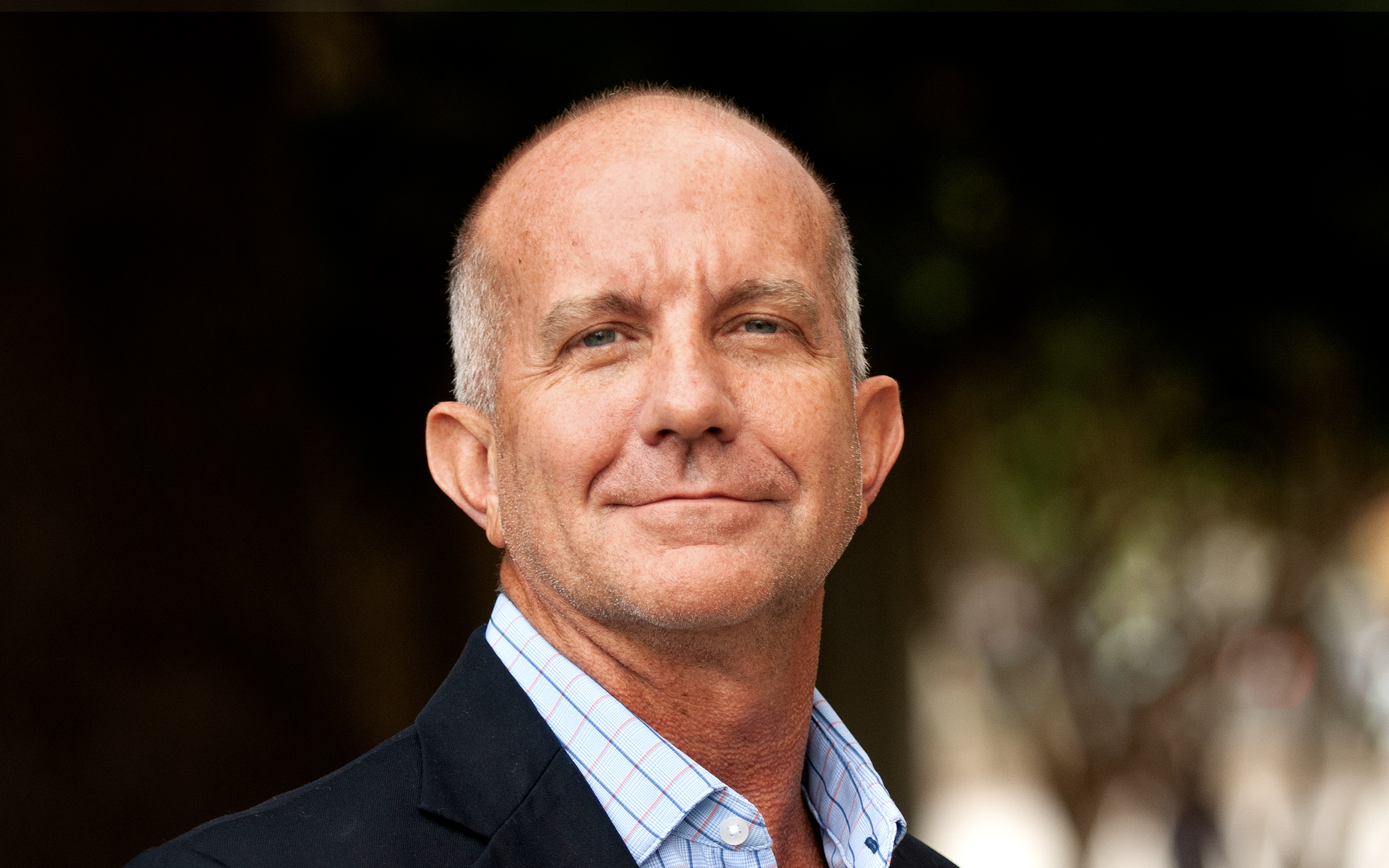
Kevin C. Gilliland
Dr. Gilliland is a licensed clinical psychologist and the Executive Director of Innovation 360, an outpatient counseling service that works with people struggling with anxiety, depression, alcohol and drugs, and relationship issues. Over the past 20 years, Kevin has worked with countless individuals and couples, participated in research trials, and lectures across the country. His individual work with clients has focused on professionals and executives who struggle with the demands of leadership, success, and family. He has served as an adjunct professor at Southern Methodist University (SMU) and Cooper Wellness Center. Outside of work, Kevin is an athlete and outdoorsman. He regularly competes in triathlons and is a three-time Ironman. He and his wife, Ann, have three children – Jennifer, Luke and Lance.
Contributors


