
Captain America: The First Avenger (2011), directed by Joe Johnston

What does it take to accomplish a life well-lived? Society offers self-help videos, master classes on making more money, quick-fix health supplements, new dietary strategies, and weight loss programs. What if a serum existed that could turn you into a superhero, granting you the abilities to accomplish the things you desired? It might seem like that would answer the challenge of achieving a life well-lived. But maybe the answer lies much closer than a super serum. This is the stuff of real heroes.
Society invents superheroes in pop culture stories to give us positive examples and to teach us to be better. Captain America presents a version of us as we’re meant to be.
I appreciated that Captain America: The First Avenger (2011) took time to build its hero, not rushing into the exciting, action scenes but showing us the heart of Steve Rogers. Though the army repeatedly rejected him for his asthmatic, physically weak body, Rogers kept trying to enlist to fight in World War II. His reason for fighting surprises us: “I don’t want to kill anyone. I don’t like bullies.” Not violent by nature, he held a conviction of standing up to those who do wrong to others.
We learn that Rogers is an example of deontology, a philosophical concept that defines moral actions according to principles of right and wrong rather than consequences and outcomes. A person chooses a course of action because it is the right thing to do, even if the consequences are negative—for instance, choosing honesty even if it means suffering a demotion. Rogers shows himself to be a man of moral goodness.
Disapproving of Rogers for the military’s super-soldier program, Colonel Chester Phillips reasoned, “You don’t win wars with niceness, doctor. You win wars with guts. Grenade!” Unpinning a grenade, he tossed it into a group of two dozen cadets to prove a point. But his point backfired when all the cadets scattered and dove for cover—except Rogers, who dove on top of the grenade, covering it with his diminutive body while shouting to everyone, “Get back!”
Not only did Rogers show “guts,” but he also modeled compassion at the highest level: self-sacrifice. There is no greater courage and compassion than the willingness to surrender oneself for the well-being others. This is the second quality we discover about Rogers. This highest level of courage and compassion becomes the key to how the story ends.
Third, I love hearing Rogers say, “I can do this all day,” when he gets beat down by adversaries. A scrawny kid from Brooklyn, frequently bullied and beaten up, Rogers always rose back up with a stout heart. It’s not that Rogers didn’t get knocked down; it’s that he didn’t back down. He rose up and endured. The Bible frequently exhorts us to develop the godly virtue of endurance, or steadfastness. Persevere. Keep going. Remain under pressure and hold fast. Yes, there are times when you don’t win—but don’t give up.
Thinking about the character qualities Steve Rogers illustrates, take a moment to read 2 Peter 1:3–11. This is the stuff of heroes. Observe the virtues you’re instructed to add to your salvific faith: excellence, knowledge, self-control, perseverance, godliness, brotherly affection, unselfish love. What do these look like in you? Add them like blocks that build up your character. And then add them with ever increasing measures; building up your character never ceases.
We meet Steve Rogers before meeting Captain America, showing us the meaning of a real hero. The scientist Abraham Erskine explained to Rogers, “The serum amplifies everything that is inside, so good becomes great. Bad becomes worse. This is why you were chosen.” Don’t look for an external, magic solution to make you into something you’re not already. If anything, the external may amplify what we already are. More money won’t turn us into something we’re not; it only amplifies what we already are. More career success? Better tech? More decision-making authority? Only with Jesus as our foundation and the Holy Spirit working in us can we grow the heroic traits God meant for us to have.
For this reason, Erskine counseled Rogers on the eve of his transformation, “Whatever happens tomorrow, you must promise me one thing. That you will stay who you are, not a perfect soldier, but a good man.” Now read Mark 10:18. Only God is truly good, possessing a moral perfection of all attributes that only one human being exemplifies: Jesus. However, the Bible exhorts us to be like God in character. Read Ephesians 5:1.
Godly character founded in Christ is our superpower. It enables us to be agents of change in a broken world and to perform redeeming acts that elevate people’s gaze to God. Let’s look at Matthew 5:1–16, where Jesus described the humble. With the beatitudes, God makes us salt and light in the world, doing beautiful deeds that inspire people to turn to him.
In the movie, when the villainous Red Skull questioned, “So, what made you so special?” Rogers answered, “Nothing. I’m just a kid from Brooklyn.”
Before he acquired the massive muscles, we saw the meek man, one of humility, moral convictions, and self-sacrifice. Develop godly character and Christlikeness as your superpower for accomplishing a life well-lived. Who you are and who you’re becoming in Christ matter most. The world needs salt and light.
Questions:
- Write down the list of qualities in 2 Peter 1:5–7 and Matthew 5:3–10. Ponder what each one means.
- Psalm 139:23–24 invites God to examine us and see if there be any idolatrous ways in us. Spend a moment before God to prayerfully listen, asking him to reveal areas of growth.
- On another sheet of paper, draw a line down the middle. On the left side, write down areas of growth or character flaws. Lay these before God in confession and ask him to graciously work in these areas. On the right side, write a list of godly qualities you believe are your strong suit. Praise God for these and ask how he can amplify these qualities in you.
- At the bottom, or on the back of the same sheet, journal about where you are in your journey. Describe it. Reflect on and write out the particular character qualities you need at this point for you to move forward in your journey. Lift this up to God.
For more devotionals in this series, click here.
About the Contributors
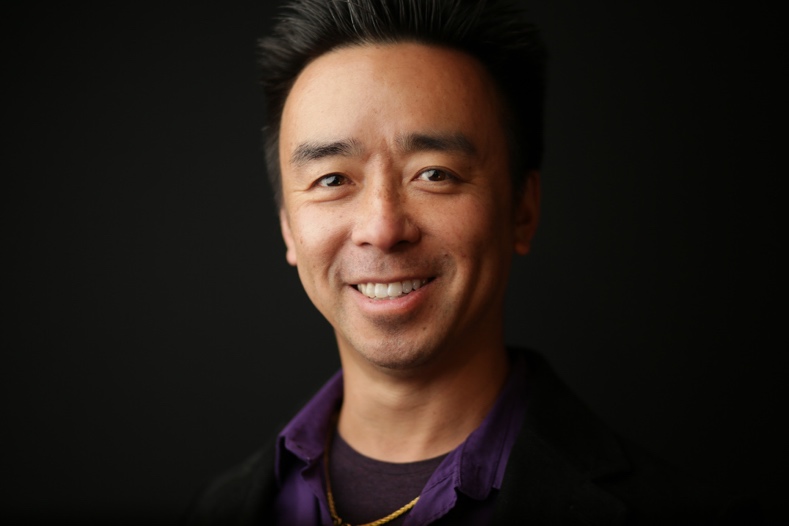
Brian S. Chan
Dr. Brian S. Chan is an assistant professor at DTS, where he teaches courses on the theology of creativity and beauty, visual artmaking, storytelling and faith, film, and creative writing. He previously pastored in Hollywood/Los Angeles and taught at Biola University, focusing on the theology of beauty, art, and film. Dr. Chan is also an internationally award-winning fine artist and serves as a workshop instructor in Hollywood. He is a board member of Lantern of the East Los Angeles International Artists.
As a certified kung fu master, Dr. Chan trained actors while in Hollywood. He authored The Purple Curtain: Living Out Beauty in Faith & Culture from a Biblical Perspective and Not Easily Broken (a novel). He is the chapter director of the Hollywood Prayer Network at DTS and mentors Christian artists in Europe through the European Leadership Forum.
Dr. Chan holds a BA in Psychology and a BA in Sociology from UC Davis, an MA in Christian Education and a ThM in Historical Theology from DTS, and a DMin in Philosophy from Talbot School of Theology. He is currently pursuing a PhD in Theology and the Arts at the University of Birmingham in the United Kingdom.
Dr. Chan lives in Frisco with his wife, Ellen, and their son, Josiah. For leisure, he enjoys tai chi in the park, creating bonsai art, collecting toys, goofing off with his son, and watching a good movie.
Contributors


