
A Still Small Voice (2023), directed by Luke Lorentzen
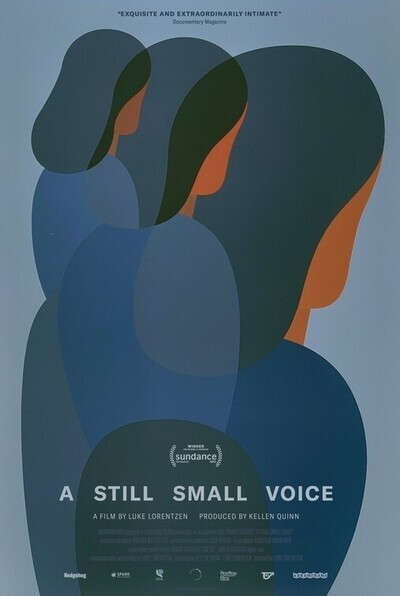
Luke Lorentzen is an Emmy Award–winning documentary filmmaker. His most recent release, A Still Small Voice, won the Directing Award at the 2023 Sundance Film Festival. This brave and raw film chronicles the worst moments in the lives of patients and caregivers from a myriad of faiths. Inspired by his sister’s role as a chaplain, Lorentzen follows a hospital chaplain in training, Margaret “Mati” Engel, as she completes her residency at Mount Sinai Teaching Hospital, Manhattan. Filmed over the course of a year, the documentary provides bedside access to patients as they grapple with the existential questions of life’s deeper meaning in the wake of suffering, and an insider look at the toll caregiving takes on hospital staff who are reaching the limits of their capacity.
During a DTS class, Theology at Sundance Film Festival, we had the rare opportunity to attend the world-premiere screening and a Q&A with Luke and Mati at Sundance. As a chaplain, Mati’s role is to provide spiritual care and emotional support to all patients regardless of their religious background. Some moments demonstrated tender care through the ministry of presence—something anyone can give, regardless of their faith. Others illustrated a deeper yearning for meaning that can only be filled by God, whose ways are higher than our ways. In one scene, Mati receives a crash course on infant baptism before walking in to baptize a stillborn baby. Styrofoam cup of “baptism” tap water in hand, Mati prays despite her own wavering belief. In a beautiful moment, the grieving father joins in, quoting Jeremiah 29:11. The richness of this Scripture, which releases our need to know to the All-Knowing One, seems to be a soothing balm, and in one gentle moment, the patient seems to switch places with the caregiver. Mati confirmed the impact of this exchange when asked during the post-film Q&A, agreeing that she had indeed been ministered to.
Indiewire captured the film well: It “gives voice to America’s collective grief in a way that little else has” (Christian Blauvelt). And, I would add, our collective need for God, the Father of all meaning. The beautiful undercurrent woven through this secular documentary is the unquenchable need for God and meaning throbbing, often unconsciously, at the core of every human. The still, small voice of our Creator calls us to himself. C. S. Lewis mused, “God whispers to us in our pleasures, speaks in our consciences, but shouts in our pains: it is His megaphone to rouse a deaf world.” In our struggle, we are forced to become quiet enough to sense the still, small voice of God. The end of ourselves leads us to the beginning of the One we truly need. Remembering this ahead of time prepares us for our most difficult moments and keeps us relying on him.
Questions:
- As you watch the film, notice the various expressions of this deep human need for meaning and unconscious yearning for God in patients of different faiths. Do you see yourself in any of them? Read Psalm 63.
- Recall moments in your life when you reached “the end of yourself” and recognized your need for God. What prompted you to move from self-reliance into God-reliance? Did it take a little or a lot, and how did it change you?
- Read Psalm 23 and Isaiah 55:8–9. Journal a new prayer of surrender to the Lord. What things beyond your understanding can you release into his care ahead of time, before pain and loss take you there?
- Chaplaincy is a ministry of presence. Who in your life has been that for you when you needed it the most? What word, phrase, Scripture, or action gave you the most comfort?
- Read 1 Kings 19:11–12. Where in your life have you sensed the still, small voice of God—through his Word, his people, or his creation?
For more devotionals in this series, click here.
About the Contributors

Bessie Barker
Bessie Barker is a best-selling Australian author and recipient of multiple literary awards. She launched her first business at the age of 23 and was later nominated for both the Australian Business Woman of the Year and Entrepreneur of the Year Awards. Bessie became a familiar face on Australian television, hosted a nationally syndicated radio program on the country’s top network, and served as an Australia Day Ambassador.
As a professional speaker, Bessie toured military war zones in Iraq, Afghanistan, and Kuwait to encourage the troops, and she has shared the stage with notable figures such as former U.S. Presidents Bill Clinton and George H. W. Bush at charity galas. Yet, all of this success took place while Bessie was far from the Lord and the Christian faith she knew as a child.
So how did Bessie return to faith in Jesus Christ—and ultimately join the DTS community as a dual-degree student and full-time staff member? We look forward to hearing her story.
Contributors


