
John Adams (2001), and a conversation with author David McCullough
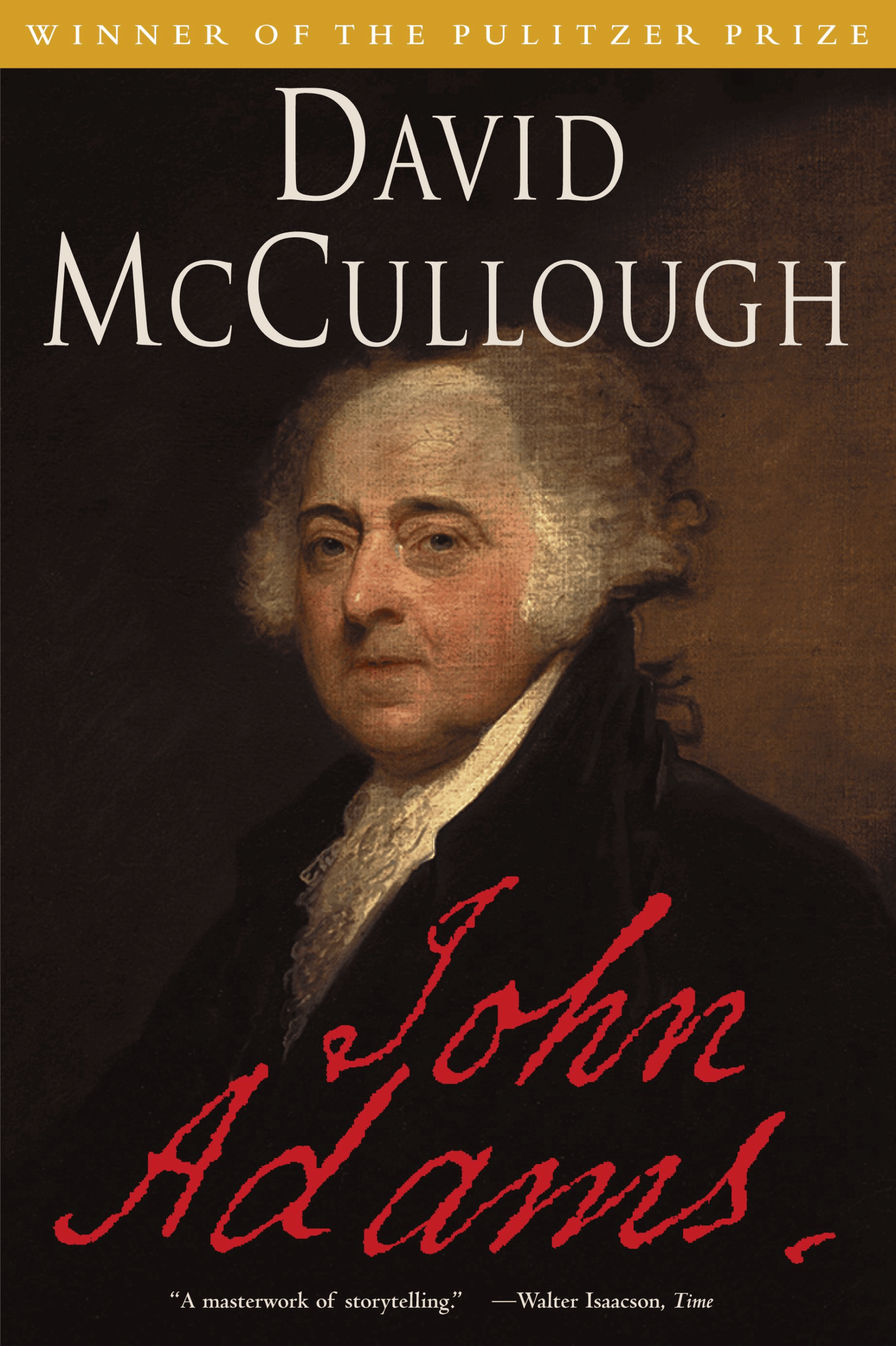
Over twenty years ago, I had the good fortune to meet my favorite historian and writer, David McCullough. His book John Adams had just been awarded the Pulitzer—his second within ten years—and he was on a lecture tour to promote it. Two Pulitzers! That achievement placed McCullough firmly alongside the finest American historians—rare air indeed.
In the few brief minutes I had to speak with him, I had to ask: What’s your secret? What was the “it” that set him apart? Maybe I had it, too—at least, I hoped I did.
“How did you write the manuscript for John Adams?” I asked.
His answer? Not magic. Not breakthrough software or inherent genius. Just this:
He filled a small cabin with hundreds of books and resources on Adams. Every day, five days a week, he walked out to that writing bungalow, sat down at his old Royal typewriter, and typed—400 to 500 words a day. Eight hours of drudgery. A word a minute, if that. Then he walked back to the house to have supper and end his day.
So much for “secret sauce.” Instead, his advice was good old-fashioned discipline, focus, and a deep commitment to a story well told. McCullough didn’t care about flash or the latest tech. He prioritized something deeper: passion. That’s what bleeds through every sentence he wrote. His secret wasn’t the typewriter; it was his relentless devotion to the subject, forged in quiet labor.
I’ve heard similar stories about other writers I admire. Shelby Foote—another hero of mine—had the same goal: 400–500 words a day. Also on a typewriter. Also slow.
Shortly after meeting McCullough, I sat in a coffee shop reflecting on the experience, and this phrase came to mind: The essence of great writing is great thinking.
But in our world, we’re conditioned to believe the point of writing is speed. Hit the word count. Meet the deadline. Keep the machine running.
Efficiency is king, society tells us.
But . . . maybe there’s a better way.
Maybe excellence—achieved through steady, disciplined work—is king.
What did I learn from David McCullough? Not every word I write is worth the effort it took to write it—or even think about writing it. Saying too much is often the surest way to say nothing well. Wordiness is often a sign of unfocused or disconnected passion.
Through McCullough’s example, the Holy Spirit is teaching me to write—and think—from a centered place, to work from a passionate heart and disciplined mind. Excellence is often forged in quiet places where no one applauds. Work, even slow work, shaped by passion and purpose honors God more than “efficient” noise.
Questions:
- Who in your life has inspired you with their careful, steady, focused work?
- Do you need to engage in thoughtful planning rather than unhurried haste? Pick one or two areas in your life where this is true. Pray, reflect and take some simple steps to make a change in these areas.
- Do you have a quiet place, a physical space you could use to intentionally hone your ability to hear from God? If not, how could you find one? If you have that kind of place already, what changes do you need to make to reduce the noise and distractions still further?
- In which areas of your life do you feel most connected to God’s grand story? Which areas seem most disconnected? If you made just one change, in one area of your life, to improve how you connect with God’s story, what would that change be?
For more devotionals in this series, click here.
About the Contributors
Kraig W. McNutt
Kraig McNutt is Executive Director of Marketing & Communications for DTS. He studied philosophy at Indiana University (BA) and holds degrees from the University of Kentucky (MSLS) and Grace Theological Seminary (MDiv). He is also an author and historian on the American Civil War.
Contributors


