
The Map of the Gospel: Bigger than We Think
Teaching classes, speaking at conferences, taking part in board meetings, and other responsibilities ensure that I am frequently on the road. Sometimes jet lag causes my brain to not know exactly where my body is located! But wherever I travel—whether Sydney, Australia, or Park City, Utah, or even just down the street to the grocery store—I can open an app on my phone and see exactly where I am. When I know where I am, I can determine which direction I need to go. As I talk with people on my travels, and as I continue to learn about our current culture, I’ve discovered that not only do many people not know which direction to go, but they don’t even know where they are on the map.
Knowing the map of the gospel is important because culture now offers numerous directions we might choose. Our problem is not a lack of options. In fact, we might liken the world today to a vibrant, but sometimes chaotic, bazaar. Sellers make many items available, and we may find the options overwhelming and some booths bizarre. As people make their way through the marketplace, they buy into the variety that’s available. We call this pluralism: the many different ways people can choose to live. In recent years, pluralism has grown more intense. Some of what previously existed only on the periphery has become mainstream. The church in the US once enjoyed a “home field advantage” as a common place of meeting and community, but now it can feel more like we’re playing an away game where we’re booed as the rivals. We see this in the emergence of the religious “nones,” those who self-classify as entirely religiously unaffiliated. In the US, that number has grown from 5 percent of the population in the 1970s to almost 30 percent today.1 So how can we best reveal the gospel’s precious offer to people who have little connection to the flourishing it can give to them and no category for a God who is involved in his creation?
We find people feeling lonely and disconnected, not knowing their purpose or how life makes sense. They create their own identities and allegiances to make the best of an uncertain situation, but they see the world in a zero-sum way: “The only way I gain is if you lose.” This brings conflict and tension as people fight to share what seems to be limited space. In The Great Dechurching, Jim Davis and Michael Graham look at people who have recently left the church, noting that many such people might reconnect if they sensed real community and authenticity. Can a deeper look at the scope of the gospel help us with all this dislocation? What does the gospel offer modern-day “sheep without a shepherd” (Matt 9:36)?
As Christians, we know the gospel is the most important message. It extends the possibility of true human flourishing, the richest quality of life. By restored relationships, the gospel connects us to new life in the One who made us in his image. He also connects us to others.
In our presentations of the gospel, we often emphasize the cross and the forgiveness of sins. But that’s only the beginning! Forgiveness through Jesus’s death and resurrection lays a foundation for the true fullness of the
gospel. God offers us a restored relationship and eternal connection to him through the gift of new life in the Spirit, rooted in the forgiveness that Jesus brought us through his death and resurrection. That new life, which we call being “born again,” starts the moment we trust Christ. It’s not just about the future—it begins from the very moment of belief, with the Spirit leading the way. In a world in which many people don’t know why they are here and what it means to be human, the gospel gives them a stable location to stand on. Understanding who we are as human beings is all about location. It doesn’t just place a “You are here” pin on the map; rather, it tells us why we are here and what makes us inherently precious to God. It also explains our worth as tied to the One who made us. God made us to know and walk with him. We have worth as human beings that others should respect. The core of the gospel affirms our precious identity as made in God’s image so that we will choose to image God by the way we live. The gospel restores what humanity lost in Genesis 3 and leads us back to Genesis 1. God designed us for connection to him and to one another. As we fully enjoy the presence of God, we know that we’re made to collaborate harmoniously, as people of many tribes, sharing God’s blessing and kingdom.
As the imagery in Romans 6:4 suggests, the message of the gospel comprises two parts: we are dead to sin, and we can be raised to new life in Christ. Think of immersion baptism: If we deal only with death to sin, we remain floundering in the water and risk drowning. But the text continues: We’re raised to a new life, proving the life-giving power of the gospel. It’s that second part that restores us to what we were designed to be. This second part is what makes the gospel . . . the gospel!
The gospel thus invites us to build on God’s restoration of our relationship. Following his forgiveness of our sin, God calls us to enter new life through spiritual rebirth, opening up a new way to connect to people.
So the gospel offers a challenge and an invitation. The challenge centers on our sin—that it breaks our relationship to God and damages others. Then it focuses on what Jesus did for us to provide forgiveness so new life can come. The cross represents a gift from God to address our sin problem and the separation and isolation it brings, since we are unable in our own power to fix our wayward hearts. Yet some church leaders share the gospel in such a way that it emphasizes the cross and getting to heaven and eliminates everything in between. The result is a truncated gospel, and churches then struggle to explain the purpose of walking with God in community. When people hear the gospel as being only about avoiding judgment, then they lose the corporate dimension, not just in the eternal life to come, but also for life now. The Bible gives us a bigger gospel than this privatized, future-only version of the good news, and that’s what we need to teach and preach.
The invitation asks us to appreciate our location. God invites us to connection through Christ, giving us a solid location and purpose. Over a (new) lifetime, and from the inside out, God transforms us into people who can love him fully and love our neighbors—all of them!—in a fresh way. The gospel thus enables new, deeper connections with God and others. Into a place of isolation or loneliness comes the potential for community to a degree we could hardly have imagined. New life is not just about “me and my God”; it’s much, much bigger.
Let’s think together about the breadth of reconciliation and where the gospel takes us. On our own, we can’t achieve the deepest reconciliation. In God, we find a bridge to shalom with all people. As all believers share the most important blessings because of God, we become an appreciative, firmly established people thriving through a common source of connection. The gospel invites us to that place.
Beyond our individual calling to reconciliation, what is the call of the church? We know from Revelation 5:9 and 7:9 that people of every tribe and nation make up the kingdom of God. Knowing that this is our ultimate destination, we need to let that refract back on how we live now as believers: I seek out, get to know, and appreciate people different from me.
Ephesians 2:8–9 contains one of the New Testament’s most concise gospel creedal statements about salvation: “By grace you are saved through faith. . . . it is not from works, so that no one can boast.” But we err if we stop reading there. Verse 10 reads, “For we are [God’s] creative work, having been created in Christ Jesus for good works that God prepared beforehand so we can do them.” This tells us the purpose of forgiveness and where salvation takes us. We are saved not by good works but to be led into good works. Works are not the on-ramp to the highway of salvation’s journey; rather, they ought to be the stops along the way as a part of salvation. Even then, keep reading.
In the rest of Ephesians 2, we see the first good work for which God equips us: Jew and gentile brought together in one body. Salvation has an individual goal and a corporate goal. In the corporate work, God attacks the tribalism of our world. First-century Jews and gentiles lived in a long history of severe estrangement and did not get along. Today, we see estrangement among many peoples—the corporate mess, and often intense conflict, we encounter every day. God stepped in and sent Christ to form his new people, a people not of one nation but of many tribes and nations, each with its own identity and yet connected to people different from them. God said, essentially, “I will make you one family in Christ.” So we observe that God has adopted us; but then we ask, “Have we adopted one another?” Here’s our opportunity to stand out in contrast to the world and its contentious tribalism. We not only bring a message of reconciliation but also demonstrate it by affirming a divinely designed diversity. When we live together well by embracing both our diversity and oneness in Christ, we show a different way. Reconciliation is a multilane highway connecting God and me—and others. That last part is important. Remember the Great Commandment, which calls us to love God and also our neighbors. The Great Commission tells us to go into the world and make disciples. Sin has severed the connections among God, me, and others, and the world’s tribalisms have sustained and even celebrated those broken connections. But the gospel invites us to change and restore those connections in a healthy direction that moves us to shalom.
Something has obscured this divine vision. In our focus on individual salvation, we’ve sometimes turned away from the gospel’s corporate purpose for the world. In losing sight of that, we lost a large part of the gospel’s core and neglected our calling to show why Christ makes a difference on a grand scale. The fullness of our mission affirms that reconciliation and the way to peace come through a reconnection to God that insists on anti-tribalism. When we pursue this unity, however, we do not obliterate who God made us to be originally; rather, we demonstrate a unity within diversity. When we share the same creator and image maker, we share one another. When we reclaim the fullness of the gospel, we present a corporate witness to a needy world. We show that Christ makes a big difference, pulling it all together.
God calls us to witness to this new way of life—within the church, but also to those who need to glimpse what God offers in terms of the new life. By corporately modeling our exceptional way of loving, serving, and forgiving, we give people a preview of what’s to come; we enable people to see what image-of-God living looks like. By demonstrating how Christ reached out to a world that rejected him, we show people God’s desire to bring them back to the array of relationships he created them for. We live in response to John 3:16: “For this is the way God loved the world: He gave his one and only Son, so that everyone who believes in him will not perish but have eternal life.” We are to imitate God’s heart: God so loved the world that he gave. We should do the same. When we serve and care for people—reaching out to them even as they ignore God or rebel against him, loving them even though they might be different—we imitate how God came to us. When Christians show unexpected concern for the religiously unaffiliated, many no longer feel alone and isolated. As recipients of selfless service, people discover that they have value and a place of connection with others. In profound ways, they see that they belong to God and to others—and they’re interested to learn more.
Cultural engagement for evangelism in a pluralistic world means relational engagement. We not only challenge sin; we also invite people into a new way of living, which often means showing what that new way looks like. Where people have no categories for seeing and experiencing life and God, we ought to demonstrate those categories through our lives and our surprising care. Only when we gain people’s trust relationally will they listen to challenging ideas about God, sin, forgiveness, life, restoration, location, community, connection, and peace. As our love shows God’s love, a door opens for someone to understand God’s love for a world amongst so many other options. A bigger scope of the gospel invites people who don’t even know that God or the gospel exists to become part of God’s gospel story. People may embrace the gospel’s invitation with a newfound faith in what God has done through Jesus. By relating well to others as we engage, we can point them to the truth that leads to forgiveness and reconciliation, and a peace that is big enough not only for me alone but also for God and others. We give people a location and open up a world of remade relationships. Now we see the map, and where a big gospel takes us: We spread peace in a contentious world by revealing a caring God who connects us to himself and to others.
1 https://www.npr.org/2024/01/24/1226371734/religious-nones-are-nowthe-largest-single-group-in-the-u-s
About the Contributors
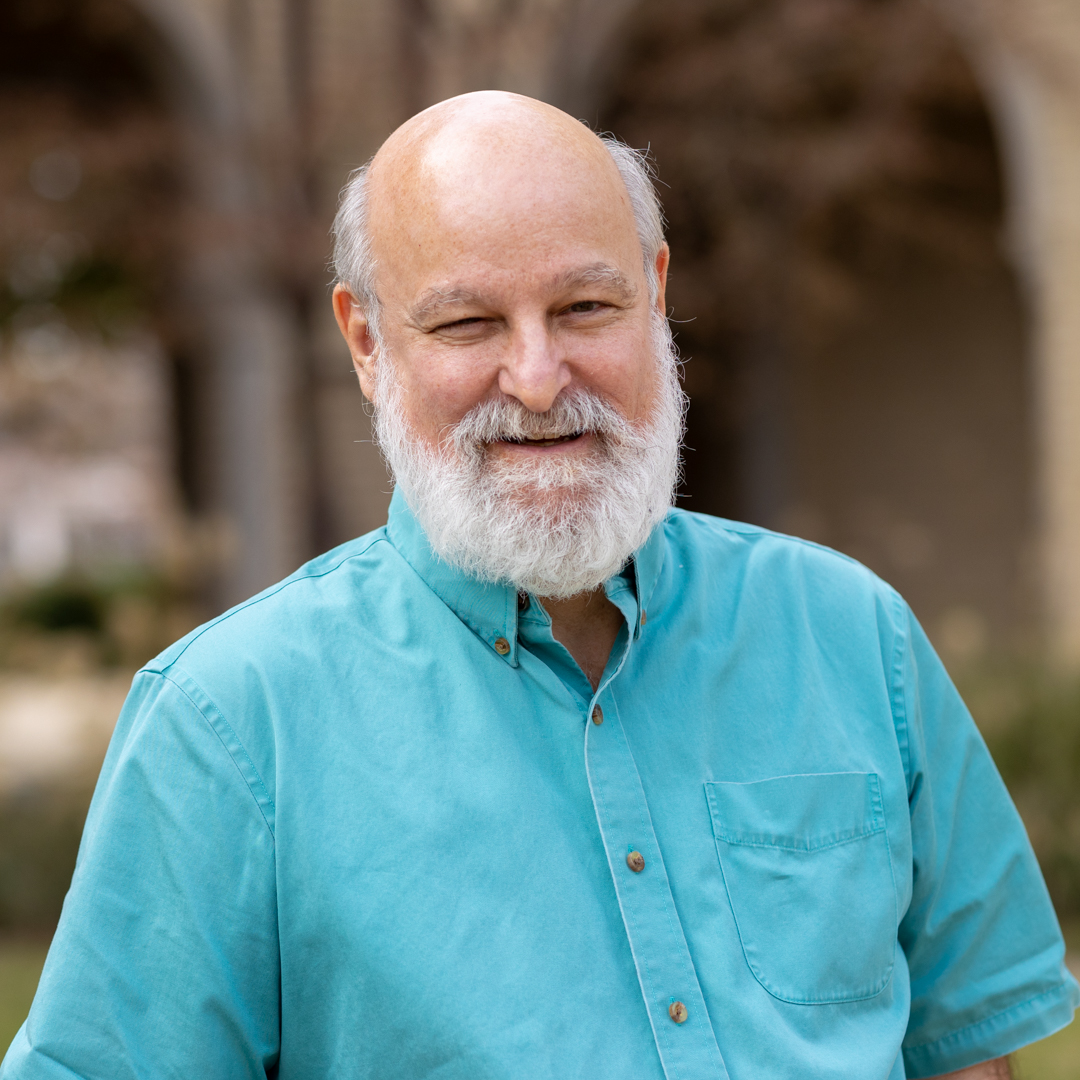
Darrell L. Bock
Dr. Bock has earned recognition as a Humboldt Scholar (Tübingen University in Germany), is the author or editor of over 45 books, including well-regarded commentaries on Luke and Acts and studies of the historical Jesus, and works in cultural engagement as host of the seminary’s Table Podcast. He was president of the Evangelical Theological Society (ETS) from 2000–2001, has served as a consulting editor for Christianity Today, and serves on the boards of Wheaton College, Chosen People Ministries, the Hope Center, Christians in Public Service, and the Institute for Global Engagement. His articles appear in leading publications, and he often is an expert for the media on NT issues. Dr. Bock has been a New York Times best-selling author in nonfiction; serves as a staff consultant for Bent Tree Fellowship Church in Carrollton, TX; and is elder emeritus at Trinity Fellowship Church in Dallas. When traveling overseas, he will tune into the current game involving his favorite teams from Houston—live—even in the wee hours of the morning. Married for 49 years to Sally, he is a proud father of two daughters and a son and is also a grandfather of five.
Contributors


