
The Wild Robot (2024), directed by Chris Sanders
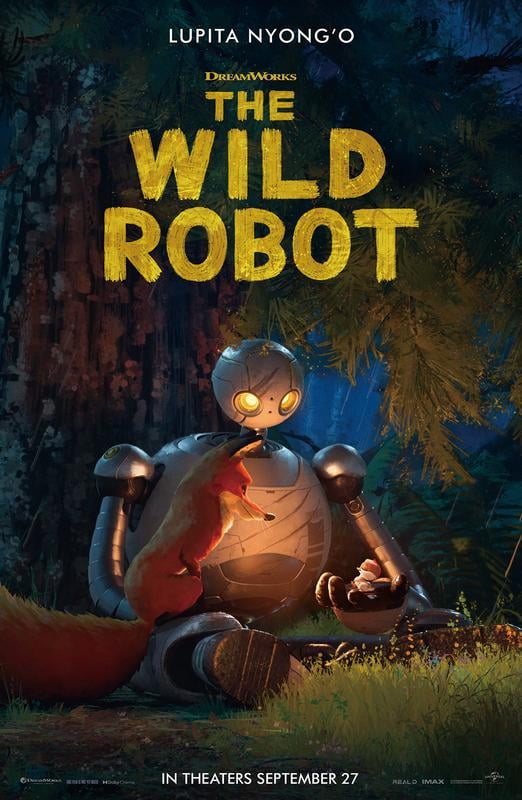
“Funny how life works.” The quote emerges as a main theme in The Wild Robot (2024), encapsulating a truth that life’s tragedies and trials sometimes become ironic twists for deliverance. When a plane carrying a cargo of robots crashes on the coast of an island, Roz winds up where no AI robot belongs—the wilderness. Designed to serve, her programming linked her identity to a specific task. What was her purpose in the wild? The wildlife she asked offered no answers, only violent opposition. Driven to find her purpose, she adapted to her environment by learning the languages and skills of the animals. Just when she seemed to have gained an upper hand in her misfortunes, an angry bear chased her tumbling down a hill where she fell on a nest of geese, killing the parents and babies, except for one egg. Accidents upon accidents plunged her deeper into tragedy. However, tragedy led her to a mission when the one surviving egg hatched: to raise the orphan Brightbill, the runt of the litter who, under ordinary circumstances, was not expected to survive. Runts were abandoned. The great reveal in the story occurred when Longneck, a wise elder, spoke with Brightbill.
“This flight is a gift Roz has given you,” Longneck told Brightbill. “Yeah, I understand,” Brightbill replied. “No, you don’t. You see any other geese here your size? The accident that killed your family saved you.”
That truth struck Brightbill. “I . . . I never thought of it that way.”
“Funny how life works.”
Ironic twists make tragedy the means for deliverance. The ironic twists in this story turned misfortunes into avenues for adoption, reconciliation of a community, discovery of purpose and belonging, and deliverance from death. In a surprising way, The Wild Robot illuminates our reading of Romans 8.
Why did this happen? What do I do now? Where do we go from here? Have you asked these questions when facing struggles and suffering? If you did, it’s normal.
The accident that killed Brightbill’s family saved Brightbill. The accident was unintentional. We would never wish harm on others to gain something good for ourselves. But God can take the painful things and use them instrumentally for a greater good. Read Romans 8:28. It describes God’s sovereign power to bring goodness from tragedy. In a fallen world, we encounter brokenness and pain. But in God’s sovereignty and goodness, pain and suffering do not have the last say for a faithful believer. We might say God uses ironic twists to turn misfortunes into avenues of deliverance and purposeful callings.
We learn several verses earlier in this chapter that God adopted us in Christ. Take a moment to read Romans 8:12–17. Because he adopted us, we gain an honorable identity as God’s sons and daughters and a belonging in an eternal family. This passage makes no distinction between naturally born and adopted children. The adopted child has the full recognition, rights, and honor of the naturally born child. Realizing our identity and belonging as adopted children of God, however, can be a messy process of discovery, as it was for Brightbill. One of the most fulfilling, cathartic moments in the movie came when Brightbill finally called Roz “Mom.” That may be a process we’re in—learning what it truly means to call God “Abba.”
Romans 8 ends with a climactic assurance of the full extent of blessings we have as adopted children and of the power that accompanies us to face trials; this is the unbreakable love of God. Read Romans 8:31–39. The bond that developed between Roz and Brightbill could not be broken—not by bullies, storms, distance, enemy robots, or even their own relational challenges. To be loved by God and joined eternally to God by his love that withstands all obstacles, whether physical or spiritual, empower us to journey with a royal identity and an eternal belonging. And we know as his children that this same loving God brings about ironic twists in our most difficult struggles.
Questions:
- How would you describe where you are at in your life story with the blessings and problems you face?
- What ironic twists have you already seen God bring about in your life?
- If you pray to God about your current circumstances in light of his goodness and sovereignty, what would you ask him or talk to him about?
- Draw a line down the middle of a paper. On the left side, contemplate Romans 8:12–17 and write down (in phrases or paragraphs) what it means for you to be an adopted child of God in Christ. On the right side, contemplate Romans 8:31–39 and write down (in phrases or paragraphs) what it means for you to be unbreakably loved by God. Now turn your paper sideways, and along the top and bottom of the middle line, write the verse that occurs between these passages: Romans 8:28. Turn the paper right side up again. Look at what you wrote; take a moment to be before the Lord with it.
For more devotionals in this series, click here.
About the Contributors
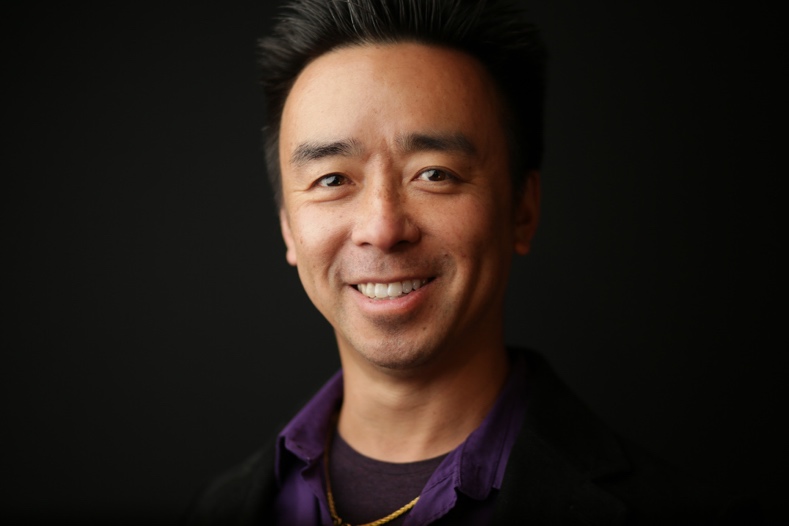
Brian S. Chan
Dr. Brian S. Chan is an assistant professor at DTS, where he teaches courses on the theology of creativity and beauty, visual artmaking, storytelling and faith, film, and creative writing. He previously pastored in Hollywood/Los Angeles and taught at Biola University, focusing on the theology of beauty, art, and film. Dr. Chan is also an internationally award-winning fine artist and serves as a workshop instructor in Hollywood. He is a board member of Lantern of the East Los Angeles International Artists.
As a certified kung fu master, Dr. Chan trained actors while in Hollywood. He authored The Purple Curtain: Living Out Beauty in Faith & Culture from a Biblical Perspective and Not Easily Broken (a novel). He is the chapter director of the Hollywood Prayer Network at DTS and mentors Christian artists in Europe through the European Leadership Forum.
Dr. Chan holds a BA in Psychology and a BA in Sociology from UC Davis, an MA in Christian Education and a ThM in Historical Theology from DTS, and a DMin in Philosophy from Talbot School of Theology. He is currently pursuing a PhD in Theology and the Arts at the University of Birmingham in the United Kingdom.
Dr. Chan lives in Frisco with his wife, Ellen, and their son, Josiah. For leisure, he enjoys tai chi in the park, creating bonsai art, collecting toys, goofing off with his son, and watching a good movie.
Contributors


