
Love in the Midst of Conflict: A Story of the Bramer Family
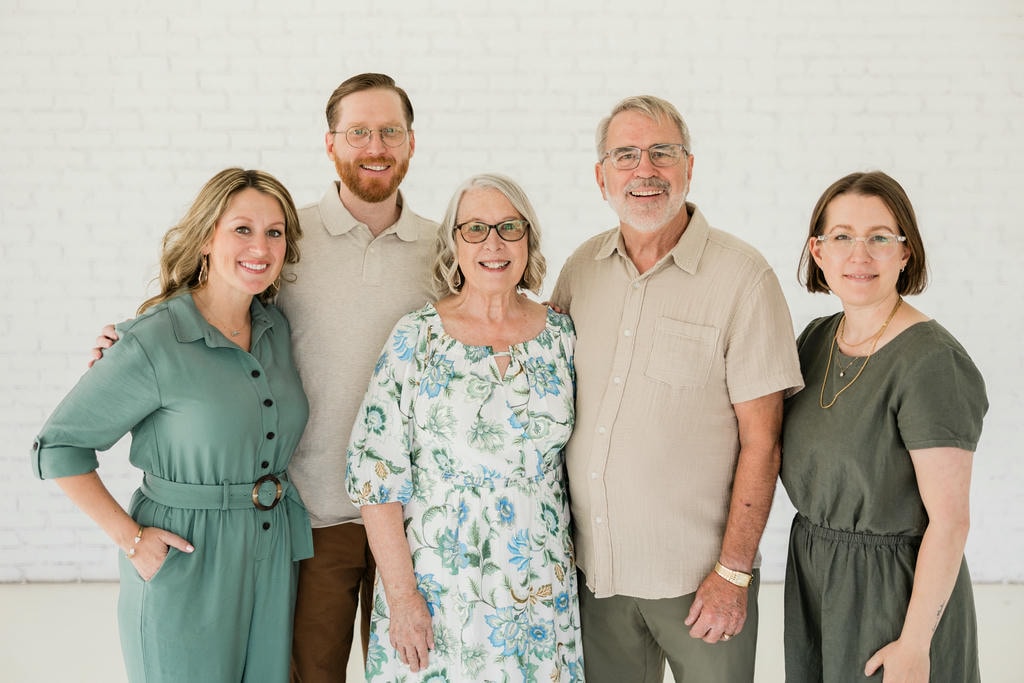
Dr. Stephen J. Bramer still remembers the spot where he stood on the DTS campus when his wife called to tell him that their son was being expelled. Seventeen-year-old Joshua had been summoned to the headmaster’s office at his Christian school, where he confessed to drug use. This upheaval irrevocably altered the family dynamics as they began walking through a season of tremendous difficulty in the hopes that their son would heal. Seminary employment brings no exemption from family hardships. Conflict within a family teaches us the significance of Christian community, the value of boundaries, and how to love others well.
The Shape of Conflict
Joshua Bramer and his two sisters grew up in a Christian home with parents who loved the Lord and taught them how to do the same. However, when teenage Joshua accepted an invitation to visit a friend’s house and consume any alcoholic beverage he wanted, he knew from the first drink that he wouldn’t stop. Stephen recalls, “I said that it’s a problem, and he said, ‘It’s not a problem, dad, it’s my solution.’”
Joshua wasn’t simply dabbling with the occasional drug use or drinking. Using alcohol and drugs to cope with the pressures of teenage life, his consumption spiraled out of control. His addiction necessitated a six-month stay in a rehabilitation center.
Several months into the recovery process, his parents still could not bring Joshua home for the holidays. To accommodate their son’s recovery, the Bramers booked a hotel near the recovery center and, with their daughters and a three-foot tree, celebrated Christmas with Joshua in a completely different way that year. Stephen remembers, “I read the Bible story and then we gave him some gifts, and by that time he was heading towards health . . . But that was the worst Christmas ever.” Recovery proved a lengthy ordeal. Stephen shares, “We weren’t mad at him. We were just deeply, deeply grieved.”
Walking through conflict, such as a family member shackled by addiction, elicits a variety of emotions. “I was embarrassed,” Stephen admits, “but the need was so great.” Grief and embarrassment often hinder believers’ desire to tell their community the truth during periods of suffering. “We decided that we would share with God’s people because we knew that prayer was the only thing that was going to save him.” Ultimately, desperation for God’s intervention overcame the awkwardness.
The Value of God’s People
Joshua’s stay in the rehabilitation center was difficult for many reasons, including funding. The program was very expensive. When the Bramers had no idea how they would pay for the help their son needed, their impulse was to pray. Stephen explains, “I sent out an email [. . .] saying that Josh was in the fight of his life and you need to pray for him.” Stephen had not asked anyone for money; yet within two weeks, they had tens of thousands of dollars, a substantial portion of what they needed to fund Joshua’s recovery—evidence of God’s provision through God’s people.
In addition to the financial gifts that believers gave, the people of God surrounded the Bramers with prayer. As a seminary professor, he found it difficult to continue with work while his son battled with addiction. Stephen recalls one particularly emotional day. He ended his class five minutes early. “I put my head down on the podium,” he remembers, tears in his eyes, “and all of a sudden felt all these hands all over, and the students were praying for me.”
His voice breaks, demonstrating the enduring impact of being covered in prayer by brothers and sisters. “It was really big,” Stephen says. Professors invest deeply in their students and feel accustomed to serving as mentors and ministers. But the beauty of the body of Christ is that all members need one another; students can minister to professors. Let us not underestimate the ministry of prayer.
The Importance of Boundaries
The heaviness of family conflict can be overwhelming. Individuals often stagger beneath the weight of the difficulties, even as the people of God walk alongside them and offer financial and spiritual resources. But boundaries must be erected so that the crisis does not become all-consuming. Stephen often gives advice to those in similar turmoil. “You need to compartmentalize in some way. I mean, obviously it’s just overwhelming to you, and it’s hard to think of anything else,” he acknowledges. “I think that can be a problem, where it becomes all-consuming.”
The weight of suffering often creeps not only into work but also into other relationships. Foreseeing increasing strife on the horizon, a wise friend counseled, “Stephen, don’t let the devil have two victories here.” From then on, Stephen and his wife refused to allow their son’s difficulties to negatively impact their marriage relationship. “Sharon and I just decided that we were going to continue to pray every night for him, not assign blame to each other.” The boundary between a troubled family member and other relationships must be firm. Thankfully, with respect to marriage, Stephen offers hope. “When you face something like that together, it has the possibility of strengthening.” As much as possible, maintain your own health by preserving the wellbeing of your other relationships.
Explaining his prayers about compartmentalization, Stephen candidly verbalizes what many believers have felt in the midst of conflict: “I would say, ‘God, I need to go in and teach, and I can’t be thinking about Joshua, so I’m going to have to leave him in your hands.’ Isn’t that interesting? Because I thought if I was thinking about him, somehow, that would help.” The temptation exists for many of us to think we are contributing to God’s upholding the universe—or at least upholding our families. Stephen chuckles at the logic he was tempted to employ: “God’s the only one who’s taking care of it, [and yet] maybe he needs my help!” We rightly acknowledge the absurdity of the infinite God needing our assistance (Acts 17:25) but often behave as though we believe otherwise. As we set limits on the disruptive nature of family turmoil, we should also remind ourselves of the distinction between Creator and creature.
Stephen reminds us that families must not shape their entire existence around the member whose brokenness is so prevalent. “You need to be careful that they don’t become the only focus of your family.” Even in the midst of his own struggle, Joshua articulated appropriate boundaries by taking responsibility for his decisions; he didn’t blame his parents. Stephen paraphrases what Joshua wanted people to understand: “It’s got nothing to do with my father raising me. I just made a choice.” What a powerful reminder to those of us tempted to take an inappropriate share of responsibility for the actions of others. Our family relationships are influential, but, Stephen maintains, “they are their own person.”
The Magnitude of Loving Well
In addition to sharing life with God’s people and striving for healthy boundaries, the call to love well persists. “You’ve got to keep loving them and not give up hope,” Stephen advises. “It’s very, very easy, I know, to give up hope and think that nothing can be done.” But the Bramers pressed on, using every resource at their disposal. “We went to counseling,” Stephen shares. “I think that’s very, very important.” In the same vein as refusing to allow a troubled family member to consume one’s life, going to counseling is a way to ensure one has the mental and emotional resources to persevere; love others by having hope.
“You gotta love them, and then you gotta pray for them and get people to pray for them,” Stephen insists, although any of these actions may feel difficult. “At a time like that, your theology comes through.” God’s call to love others (Matt 22:39) and to pray constantly (1 Thess 5:17) remain his will for our lives in every season. “We still went to church,” Stephen recalls, “and we still worshiped” amidst overwhelming circumstances. Drawing near to God may be difficult in times of turmoil, but suffering can be a catalyst for growth. Sharing life with fellow Christians can bolster endurance, but prayer is also a way to affect change and love those who struggle.
Loving well can also take the form of speaking truth. Joshua initially ended up in his headmaster’s office because of a girl who “squealed on him.” No teenager wants to be considered a tattletale or rat by her peers, but a fellow student overcame this fear because she cared about Joshua’s safety. At the time, Joshua was livid. But after he completed his rehabilitation, he expressed a desire to find out who had outed him—this time not for vengeance but gratitude. “We’re very, very thankful for her,” says Stephen. “That could have saved our son’s life, you know?” The boldness of a teenage girl to report her friend, even at the risk of ruining the friendship, was a picture of loving well under difficult circumstances. Hope, prayer, and truth work in tandem as we love those in trouble.

The Redemption of Family Conflict
Joshua not only recovered from his addiction but enrolled at DTS. “When he came here as a student, faculty members knew he was an answer to prayer,” Stephen smiles. When Joshua was expelled from high school, he was unwelcome on his school’s campus; a few years later, having experienced healing, he was invited back to speak in their chapel service. In his kindness, God completely transformed Joshua’s life. Joshua now lives in Hungary with his wife and five children. He serves as a missionary and the director of the Word of Life Bible Institute. For the sake of the gospel, Joshua and his wife have put down roots in a village of 3,000 people.
Stephen and his wife have been married for over fifty years. “I always say that God never wants us to go through sinful activities,” Stephen emphasizes, “but he’s a big enough God that he can even use those sinful activities to his honor and glory and to our good.” No one hopes for family conflict. Pain is inevitable in a broken world in which we rub shoulders with broken people. But redemption is possible. The Bramers never wished for the kind of suffering they endured. Now viewing their son’s addiction in the rearview mirror, Stephen reflects that “we’ve been able to use it for ministry.” None of us is alone in navigating immense pain or family strife during our walk with God. Stephen says, “I’m extremely thankful to the Lord, thankful to my wife, thankful to the Christian church. We were shown grace, we were shown deep care, shown what love really was.” The Bramers endured family difficulty by leaning on Christian community, valuing boundaries, and loving their ailing family member. In the midst of your family conflict, remember how God provided for the Bramers in their trials—and take heart!
About the Contributors

Kasey Olander
Kasey Olander works as the Web Content Specialist at The Hendricks Center at DTS. Originally from the Houston area, she graduated from The University of Texas at Dallas with a bachelor’s degree in Arts & Technology. She served on staff with the Baptist Student Ministry, working with college students at UT Dallas and Rice University, particularly focusing on discipleship and evangelism training. In her spare time, she enjoys reading, having interesting conversations, and spending time with her husband.
Contributors


