
What Yesterday’s Saints Teach Us Today: A Conversation with Professor John Adair
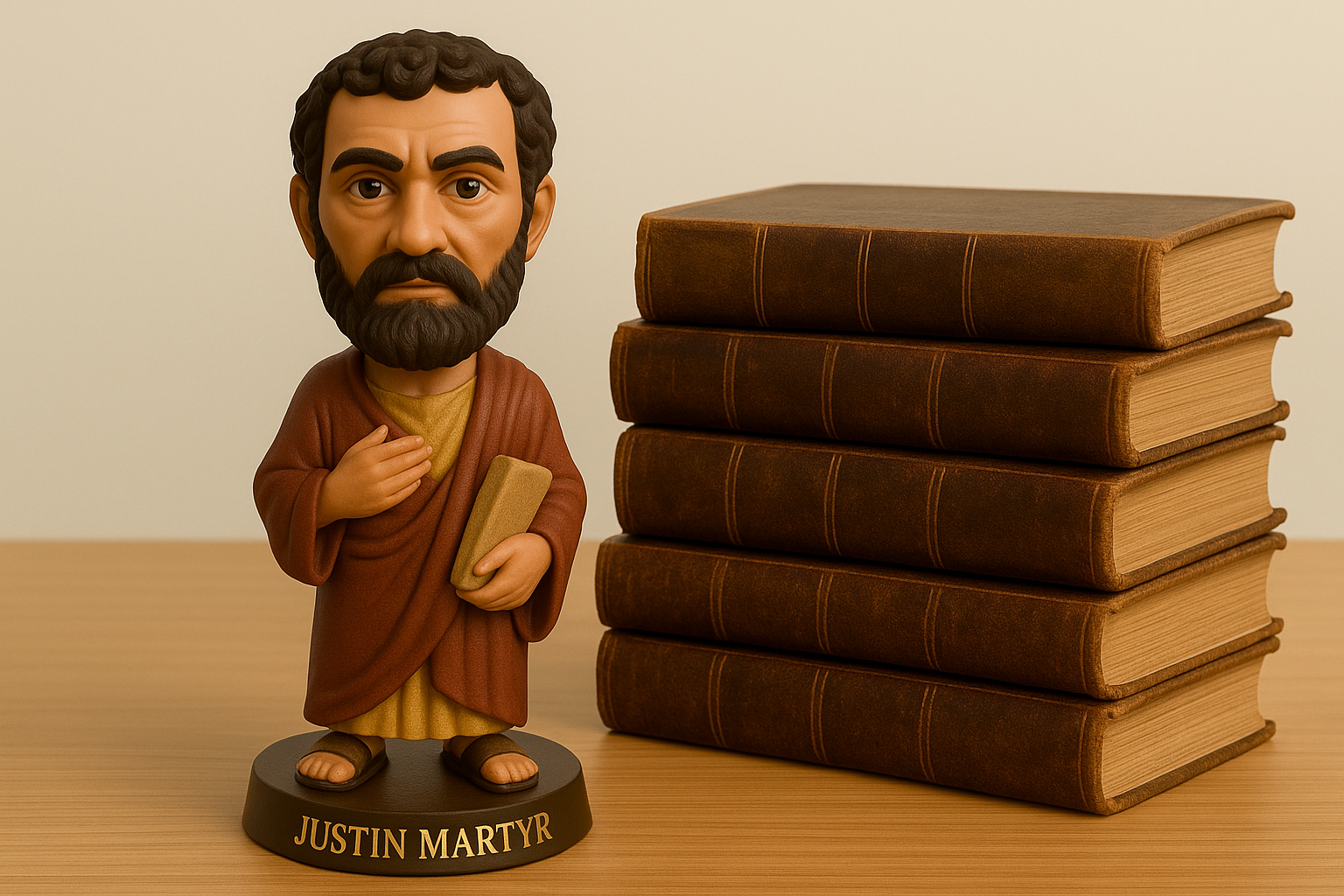
John Adair, professor of theological studies at Dallas Theological Seminary, has a dear friend named Justin. Justin died many years ago. In fact, Justin died centuries before John ever got to know him.
No, this isn’t a ghost story or a delusion. John’s admiration for second-century Christian apologist Justin Martyr began before John’s doctoral studies, but research for his dissertation sealed the friendship.
Perhaps you care little about ancient church history. Maybe you feel like you should care, yet you struggle to work up the passion. But taking a seat on the blue leather wingback chair in John’s office on DTS’s Dallas campus will change that.
John’s office displays artifacts of his interests: posters from Robert Bresson and Charlie Chaplin films; bobbleheads of Martin Luther and John Wesley; and mementos of bands such as Pearl Jam and the Avett Brothers. Conversation with John flows easily, regardless of the subject matter. He shares personal anecdotes about his family and explains to the uninitiated his favorite Lakers basketball players. With the same enthusiasm, he describes figures from church history.
John’s dissertation focused on Justin Martyr’s use of Pauline epistles in establishing his articulation of Christian orthodoxy. It sounds erudite, but John speaks of Justin as though talking about a friend. In discussing history, John does not merely recite facts and data; he tells stories about what he loves and finds beautiful. History becomes compelling when it’s told by someone with such appreciation, depth, and compassion. Talking with John may convince you that a subject often considered dry can instead yield meaningful lessons for the Christian life. What I learned from a conversation with John is that church history matters for at least three reasons: it reveals the Spirit’s work in the past; it cultivates virtue in the present; and it reminds us of our hope for the future.
The Spirit’s Work in the Past
History allows us to glimpse the Spirit’s work across the ages. John’s thoughtful tone communicates respect for those who came before us. He points out that “there’s an attentiveness to the work of the Spirit that we don’t have any access to if we’re ignoring history.” We might sometimes neglect to consider the Holy Spirit’s work in history as we look back through the ages. “The Spirit’s been at work for two thousand years,” John says, “indwelling Christians and doing stuff,” in the same way he indwells us and believers we know personally. Just as we care about God’s work in the lives of those around us, “I would think I would still be interested in another sister from 600 years ago, or a brother from 1200,” John muses.
John’s thoughtful study of church history leads to gratitude for those who have come before us—and for the Spirit’s movement in and through them that deepens our faith today. John shares, “There’s something so affirming about reading, at all of these different eras, people who are articulating the same things that I care about.” Virtues such as justice or compassion have existed for millennia: “It isn’t something we’ve just made up.” God has guided people throughout the ages. “I wish more Christians understood why our history is significant. We are beneficiaries of our history,” John says. Truth from the Bible “gets made concrete in the lives of Christians who receive the Scripture and are working it out,” he points out, not content to let anyone miss such an opportunity for growing in their faith.
Cultivating Virtue in the Present
Believers from the past demonstrate timeless virtues. John highlights a rich connection to Justin Martyr that helps contemporary believers understand how we should engage with the world around us today. Justin exemplified a charitable attitude toward the surrounding culture in the philosophical realm. “There’s a generosity of appreciating what’s true in the world around you,” John says, “even when it doesn’t come from Christian voices.” John developed this posture through his college years, and his face brightens when he recalls his realization that Justin Martyr had written along similar lines. “I connected with that at a pretty deep level,” John says. “Now he’s a close friend,” he laughs.
Even if you have little interest in history, John’s passion can convince you of its value. You find it easy to share his interest because he cares so much about his audience. With his students, he demonstrates compassion in his patience and demeanor. If you talk with John, he doesn’t make you feel like you squander his time, even if you fumble through your thoughts and questions. John says his friend Justin has a charitable attitude—and, as I learned, so does John.
Our Hope for the Future
The lives of our historical brothers and sisters reveal what it looks like to follow Jesus. Many Christians think of Hebrews 12:1 as simply referring to a cloud of witnesses observing us. John, however, perceives a grander narrative. He describes an experience in Italy of viewing a mosaic of crowned martyrs lined up, facing Christ. Through John’s gestures and description, you get a sense of both the artwork and its effect on him. “That image is such a powerful one,” He explains. “I come to church, I’m worshiping with the community . . . and as I participate in that, there is this group of people from the past that, yeah, are witnessing what we’re doing, but also, by their lives, have witnessed what it looks like to follow Christ.”
When we remind ourselves of this narrative, our perspective broadens to embrace our brothers and sisters across chronological boundaries. We also anticipate a new heaven and new earth together. We will one day fellowship with believers from all time periods as we worship Christ side by side. “I have spent a great deal of time with Justin,” John says. “And I do consider him a friend—even if he’s dead, and I’ve never met him. But I hope to one day.” The respectful perspective of Justin Martyr, shared by his friend Professor John Adair, points us toward compassionate cultural engagement. For all of us, reading historical voices cultivates timeless virtues and reveals the Spirit’s work in the past. Our hope reminds us that we will one day worship Christ with all the saints—past, present, and future.
About the Contributors

Kasey Olander
Kasey Olander works as the Web Content Specialist at The Hendricks Center at DTS. Originally from the Houston area, she graduated from The University of Texas at Dallas with a bachelor’s degree in Arts & Technology. She served on staff with the Baptist Student Ministry, working with college students at UT Dallas and Rice University, particularly focusing on discipleship and evangelism training. In her spare time, she enjoys reading, having interesting conversations, and spending time with her husband.
Contributors


