
Ink & Impact in Creative Writing
Join Kasey Olander with creative writing professors Brian Chan and Reg Grant for a conversation about creative writing, the discipline behind the craft, and how stories can shape culture and Christian faith.
Timecodes
- 2:01
- What is Creative Writing?
- 8:42
- Transforming Power of Stories
- 14:22
- Embodiment of Story
- 17:40
- How Stories Draw us in
- 23:42
- How to Craft a Story
- 30:16
- Giving Life to a Story
- 35:52
- How Writing Impacts Culture
- 45:40
- Closing Thoughts
Resources
Transcript
Kasey Olander:
Welcome to The Table Podcast, where we discuss issues of God and culture to show the relevance of theology to everyday life. I'm Kasey Olander. I'm the web content specialist here at the Hendrick Center at Dallas Theological Seminary, and I'm so excited that you've joined us today. Today our topic is creative writing. So this is almost a $30 billion industry in the US around the year 2023. I think this is an important topic because a lot of us first learn to read by some sort of fictional writing. That's a lot of what children's first experience reading is. And then as Christians and at DTS, we care deeply about the written word. We believe that that reveals God to us. Obviously, we're not saying that scripture is creative writing because we believe in its inerrancy, but we also worship a God man, Christ, who spoke in parables and demonstrated creativity and storytelling. So we're embodied humans who respond to stories, and God has given us creativity and we get to emulate him in that way.
So for our topic, we have two esteemed s joining us today. First we have Dr. Reg Grant. He's Senior Professor Emeritus of Media Arts and Worship. Reg, thanks for being here today.
Reg Grant:
Thank you. It's good to be here, Kasey.
Kasey Olander:
Yeah, and we also have Dr. Brian S. Chan. He's Assistant Professor of Media Arts and Worship. Thanks for being back with us, Brian.
Brian Chan:
Thank you, Kasey.
Kasey Olander:
Yeah. So I will distinguish this episode from some other ones that we've done. We have done some episodes about reading. Daryl and I interviewed Karen Swallow Prior on an episode called Reading Literature Well. So today is looking at the other side of that in thinking about creative writing. So to kick us off, Reg, would you talk about what is creative writing?
Reg Grant:
Creative writing is the expression in written form of our unique perspective on any truth or any fact. It doesn't have to correspond to the facts like repertorial writing would be covering just the facts, ma'am, the old Joe Friday thing. But it would be an expression of that same truth, but from the perspective that is uniquely ours and in a format that would be when we're writing fiction, because creative writing covers fiction and nonfiction. But if we're doing a fiction piece, it would be the expression of that truth, but in a fictionalized form, a one that doesn't necessarily correspond to hard data facts, but is still revelatory for the reader.
Kasey Olander:
Okay. So it sounds like you're saying it could be first person or third person, and-
Reg Grant:
Yeah, there are different varieties of third person as well, but yes, it could be third person or first… First person's a lot more difficult to write in than third person is, but it's also much closer to the subject, so it can be a very powerful way of writing. It's just hard to write. I just wrote a novel in first person, so it's very close to home for me.
Kasey Olander:
Ooh. I'm definitely going to come back and ask you about that, but I want to see if Brian, you have anything to add about what creative writing is?
Brian Chan:
Yeah, I'll just add to that creative writing is way of accessing that capacity of our minds to be able to sense, perceive, and conceptualize in ways that are beyond the information itself. Maybe for us to be able to sense the information, experience is very important to creativity. So to be able to write in a way where both the audience, the reader, will be able to experience the writing in a very sensitive form or maybe in forms where it accesses their memories, forms where they are taken through an aesthetic kind of experience of whatever is being conveyed.
But it's also for the writer. So sometimes we process through the means of creative writing. So sometimes I might be processing through a situation that all the information's there, but how come I can't seem to wrap my mind around it until maybe I write about it creatively. And then it accesses the emotions, the memories, and it takes me through metaphor and similes and analogies and allegories. Now I have a deeper, more experiential, fuller understanding of what it is that I'm trying to wrap my mind around.
Kasey Olander:
That is really helpful, and that sort of gets at some different dimensions of our humanity. You're talking about sensing and emotions. We have a number of episodes that talk about a Christian view of emotions and that kind of thing that obviously we'd recommend to our listener. That is fascinating that we've covered both the experience of writing for the person, but then also the work itself. So that brings me to Reg, you talked about a novel that you recently wrote. Can you tell us about that? And then also just in general, what place does creative writing have in your life?
Reg Grant:
For me it is there's a therapeutic aspect to creative writing that Brian talked about. As a matter of fact, just as a side note, we used to have, and probably still do, people from our counseling department attend some of our creative writing exercises in the classes that we teach here, because they can use it to help couples express themselves in ways that they can't verbally. Good things happen when you write, and sometimes they use it as a diagnostic tool to help them uncover issues in marriages, relationships, and so on.
The novel that I wrote is called A Window Between, and it's very close to my heart because it deals with a child named Opal Whiteley, a literal person who lived at the beginning of the 20th century and died in her 90s. She lived a long life. After her death, we think probably she suffered from what used to be called Asperger's syndrome, high-functioning autism. DSM-5 classifies it as an autistic expression on the spectrum. I have a relative of mine who has high-functioning autism and one who is very close to me.
So it had a really personal angle in my life, and it helped me process some of the things in researching autism, some of the things that were going on in Opal's life that went undiagnosed. For years, they thought she had schizophrenia and she didn't. She was just a brilliant and highly, highly creative child and young adult as well. So I think that the things that I wrote and the place that creative writing has in my life has evolved from the time I started in the seventh grade when I was the editor for the George West Shorthorn newspaper, my junior high newspaper.
Kasey Olander:
That's awesome.
Reg Grant:
And wrote my very first creative piece on Tarzan and The Guardian of the Bones, which was a total ripoff of a Johnny Weissmuller Tarzan movie. But it was so much fun and I enjoyed it so much, and I was hooked and been writing creatively ever since.
Kasey Olander:
I love that that's so memorable for you, even from seventh grade.
Reg Grant:
Mm-hmm.
Kasey Olander:
So cool. What about you, Brian?
Brian Chan:
Okay.
Kasey Olander:
What places does creative writing have in your life? And you can talk about any recent projects if you want to.
Brian Chan:
I was so immersed in Dr. Grant's answer, I forgot the question. Yeah, like Reg, but mine doesn't go back to seventh grade. Mine goes back to… Did you say seventh grade? Oh, mine goes back to fourth grade then. Yeah, I have a box full of my fourth grade and fifth grade creative stories that I wrote. They are still all in the box. And I have the grade, the score for my teachers. And I would say that's where it all began for me was from fourth grade. And boy, having a good teacher at that age to nurture that. They nurtured. I remember those teachers. They nurtured that side of me.
And I think it really helped to develop me into who I am today because it gave me ways to process. Process about issues in the world, things about growing up, identity, values, beliefs, and I processed it through story. What is courage? What does it mean to endure? What is really true, real, and valuable? In a very kid-form way, they were all adventure stories, but I processed it. And then as an adult, so like Dr. Grant, I have a novel called Not Easily Broken, and it's about a widowed father who's trying to rescue his 6-year-old abducted daughter, and he has his 15-year-old angry son along with him. And it's basically a story about loss.
And what I love about writing fiction at least is combining or integrating psychology and philosophy. How do we explore the mind, the heart, and how we deal with issues in life? And how do we explore philosophical truths? What do we discover about life ourselves and the world that is true through the trauma and the drama that God allows us to go through? And that's what this story's about. It's an action adventure. He's an engineer and a martial artist by night, is not me, but I did have to do a lot of research in the engineering side of it.
It's a strange sort of job he has, but he's a frequency engineer, so he's an expert in sound. He has to use all these skills to rescue his six-year-old abducted daughter while having his angry teenage son with him. And so even in my adult life when I was writing this, there were times I've had this one coffee shop spent five hours at here in Hollywood in the same coffee shop, but there are moments where I just broke down crying, because in the story, I'm with him and I'm processing with him.
And one of the things that a story like this does that I think other films and novels do is there's something called counterfactual realities. And basically is taking us into a reality that we may have never experienced. I've never experienced losing a spouse, but what would it be like? And to try to make the story visceral, real enough so that the reader and myself would be in those shoes. And I'm crying with the… Ray Lee is the main character. I'm crying with Ray Lee.
But through that, we get to expand our cache of knowledge through the counterfactual reality, to step into the shoes empathetically into other characters' lives and to process through what would that be like to go through that, to have a loved one who has Alzheimer's or to… Like the movie Up, everyone cried in the movie, the Pixar movie Up. Or like historical fictions, war films. I'm a big war film person. What would've been like to have that kind of test of courage? Would you have maintained your moral and virtuous standards in the times of chaos and fighting and anger? Those counterfactual realities I think are very important for us that expands our development as human beings.
Reg Grant:
Can I jump onto that?
Brian Chan:
Yes.
Reg Grant:
Something that you said earlier in your response is, I think, critical to developing our skill set as creative writers. And that is articulating what we have read and what we are writing orally, to speak it. One of the most helpful things that one of my mentors, Mary Ann Pavlik, she was just fantastic. I was with her for six years of my… From seventh grade through graduating in high school. She moved up when I moved up. She would take me and say, "Look, we're going to investigate something here that most football players…" I was a football player, believe it or not. "Do not experience, and that is poetry."
And so she would put me in this little room during lunch in high school and give me a mic and say, "I want you to read this poem into this microphone, and then I'm going to come back and we're going to explore the meaning of the poem and what you discovered in reading it." And we did that. We did that for years, and it was transformative in my life. And my novel, I'm reading it now for Audible, you discover things in reading it aloud and reading great literature aloud that you don't if you just read it silently. So I would really encourage our listeners to expand the things that they read to include great literature, well-read, listen to Audible, and read it yourself out loud. And same for great poetry.
Brian Chan:
Yeah, I think the key word Dr. Grant said there's discovery. It's a means and a way for us to grow, because we… I think you said the word repertoire too, and it's a repertoire of experiences also through fiction, through poetry, through narrative. We expand beyond the narrow view of just simply our own perspectives. And I think God teaches us about faith and the meaning of faith and the depth, the theological meaning of faith and belief through expanding our experiences. So I think that much of many of the narratives are written the same way, where we're meant to step into the boat with the disciples and we're meant to be on the hill with the disciples listening and watching Jesus. Even though this happened over 2000 years ago, it's written in a way where we can be there and it expands our experiences.
Kasey Olander:
Yeah. There are so many different things that you guys have brought up that I want to touch on. But one thing is what do you think the difference is between reading something silently, reading it myself, verbalizing it out loud as opposed to listening to an audiobook? Why do you think that those are so distinct?
Reg Grant:
When you read it out loud, it's more organic. Even involuntary muscle response is involved where you are engaged, whole body response to the truth that you're discovering or the fiction that encases the truth that you're discovering. One of the things that happens when you read, and especially when you read expressively, is the discovery, again, back to Dr. Chan's mention here that you can capture characters creatively and for your children. That's just invaluable. My kids loved a story, an adaptation of Bunyan's Pilgrim's Progress that's called The Dangerous Journey. And PBS had a special on it, and they have a book. It takes out all the boring parts and it keeps all the fun adventure parts of it.
I read that book so many times to my kids. I was just sick of it really. And I was traveling a lot in those days. So I took a little cassette recorder, recorded me doing all of the great voices that are in Pilgrim's Progress, and then my children had daddy reading to them at night when I was gone on a plane somewhere. And you can't do it wrong. You just explore all the nooks and crannies of these marvelous characters that have been written, and your children totally relate to it and buy into it.
Brian Chan:
Yeah. So thanks to Reg Grant, we have a class here called Dramatizing Scripture. This is exactly it. It's when the students learn to incorporate their whole body, movement, and there's a… It's hard to convey in words, and we should be able to, because it's about creative writing, but there's a sense of the body of movement captures part of the capturing of the text as part of the expression of the text. So not only is it vocal, it's not just your lips, it's your whole body. You feel it, and there's meaning in it. There's meaning in the movement that's coupled with as you're reading the text. And there's a level of discovery through that, a level of discovery of what that text means.
And then on the other side, those who are receiving it, there's a level of how captivating it is. I've been reading the Bible to my son for many years, and then it came to a point where he started to feel like, "Gosh, this is boring." And then one night, it was during the semester, while Reg and I are teaching Dramatizing Scripture, I said, "Why don't I apply Dramatizing Scripture to my son?" He's usually at bedtime. That's when we read it. And I started doing that. And his eyes were just so big, and he was so tuned into me, and I'm like, "Oh yes, why don't I use this at home?" it's just bringing things–not bringing thing to life because the scriptures alive, but it is showing, displaying it rightly so how alive the scriptures really are.
Reg Grant:
There's a wonderful little story about Dr. James Dobson, who used to interview a man named Dr. Donald Joy years, years ago when he had his focus on the family program. And Dr. Joy would come on, and one of the episodes in the series dealt with storytelling, and he said, "What, have you found?" And he was a specialist in working with children, Dr. Joy was. And Dr. Dobson said, "What have you discovered about the value of story with Kids?" And he said, "It's really interesting because if you take children, very young children between three and five years old, and you put the boys over here with a set of toys, and the toys included trucks, dolls, what you would think of as gender-specific toys, but they're all mixed, and you take girls and you put them over here, the boys wind up getting the trucks and making inarticulate sounds like, like that, but they don't use words. The girls pick up the dolls and have conversations."
And that goes all the way down to you get to junior high.
Brian Chan:
Oh my goodness.
Reg Grant:
And you see, okay, at the first junior high dance, you look over in the corner of the gym and all the boys are congregated and all the girls are congregated. The boys are over there talking about the latest Michael Jordan hoop victory and telling sports stories. The girls are talking about the boys and what's going on in their lives. And then you go further down the road to congregations. And when you minister to congregations, Dr. Joy said, "The guy who is wise, the pastor who is wise, is going to tell stories in the pulpits and the same as Jesus did, telling parables, because the average American male in the congregation, when given the choice will say, 'Just give me a grocery list. I just want to… Don't fancy it up. Don't put it in a story. Just give me a grocery list and that'll be good, and then I can check it.'"
If you do that, the typical mail will go home, check it off, and that's their sanctification. That's how they're following the Lord, because they checked off all of the things that they were supposed to do without ever having done it. If you tell a story, you sneak up, according to Dr. Joy, you sneak up on the backside of the men. They're unsuspecting, they don't know what's happening, but all of a sudden they're involved in the story, and you get the lean. You get the people leaning forward in the pew and engaged in the pew. And he sees more positive effect from telling stories to men and women than he does ever in just giving a detailed grocery list of things to do or not do.
Brian Chan:
I feel like you've just psychologically given me such an enlightened view about why I am the way I am. It started when I was playing with GI Joe's and trucks, and I just made pew, pew, pew sounds. I should have been playing with more dolls and having conversations.
Kasey Olander:
Yeah. You guys have highlighted so many different things like this embodied experience and the way that we connect to stories in a way that a lot of times we don't even explicitly address. I don't think anyone consciously says, "Oh, he's telling a story. Now I will be impacted in a different way." but it's fascinating that that's just part-
Reg Grant:
It's how we're wired. Exactly right. It's exactly right. We are storytelling engines, and we relate to stories because they touch us on so many levels other than just the intellectual. It touches the heart. And once you engage the heart, then… It's an easier move from the heart to the head to the feet in application than it is from the head to the heart to the feet because the head sets up barriers. It gives us excuses not to embrace the truth. The yeah, but syndrome, "Yeah, that's a good argument, but you don't know my wife, or you don't know my husband, or you don't know my kids. You don't know how important." Whereas if you engage them in a story, then those defenses have been ameliorated and diluted a little bit, enabling them to embrace the story and then act on it.
Brian Chan:
Reg's example about the little boys and girls touches on something that Madeleine L'Engle writes in Walking on Water, Reflections on Art and Faith. She says, "Words aren't just words. They contain concepts. And so when we lose certain vocabulary in a culture, we are also losing a concept." Being bilingual, I know there's certain things I can only capture in Chinese. There's a word for it that I don't find in English. So in creative writing, we're not just trying to express words, we're expressing concepts. And maybe that illustration about the little kids, maybe if we were developing more stories at a young age, we also develop the concepts for ideas and how important it's for us in our culture that to have creative writing, to engage in creative writing in order so that we are more astute in certain ideologies and concepts and comprehension about things are very important.
Even a word like grace, how can we use creative writing to demonstrate the depth of this concept, the visceralness? What does it feel like? What does it taste like? What is the way, this idea of grace? And not just take it as a light abstract form that we don't really wrap our hands around.
Kasey Olander:
I think it's Philip Yancey who has a book called What's So Amazing About Grace? And then he uses a lot of stories. He's not just giving like, "Here's a dictionary definition," like you talked about earlier, like the data or the facts, but he's telling compelling stories about people demonstrating extraordinary amounts of grace, and that's what makes it all the more compelling. And so you're talking about these concepts and ideas and how we develop as humans and how we could facilitate that development for younger people by engaging them in stories.
So I want to go back to you guys talking about, I think you both mentioned it earlier, but empathy. In the novels that you both addressed, that you've written, you mentioned that there are some things that were really close to you, some things that you really related to, and then there were other things that you had to do research on and discover and study. What is it like to come up with an idea for a story? How do you decide what parts of it you are going to relate to in a first-person experience kind of way? And then how do you decide what parts you're going to bring that you haven't experienced yourself?
Reg Grant:
Oh, that's a great question. You don't wait for the muse to show up.
Kasey Olander:
Okay. It's a discipline.
Reg Grant:
It's a discipline. There was a wonderful interview that Johnny Carson did with Paul Simon years and years ago. Simon was at the height of his popularity. He was the Simon of Simon & Garfunkel, and he was just at the apex. And he sat there and he brought his notebook, his sketchbook of creative writing, the things that he was working on. And Carson said, "Is there a sample in there of one of your famous songs?" And he said, "Here's Bridge Over Trouble Water. Here's how it started." And he showed the picture of the handwriting, And Carson, he said, "There are a lot of cross-outs on that and changes." And Simon said, "Yeah, he said, "It went through a lot of versions before we got the one that finally worked."
And Carson said, "Huh?" He said, "So the Muse didn't just show up and whoop, and there it was and all fully formed?" And he said, "Nope." He said, "It's a job. And I get up at what, seven or eight o'clock, whatever it is, and I work until 1:00 or 2:00 or 3:00, and then I quit." And he followed Stephen King's later advice to stop before you're finished because then you want to get back in the chair the next day. But it was a revelation to… I don't know how real the revelation was, Carson probably knew, but it was… He pretended at least that it was a revelation to him that it's work.
You make sure the muse shows up on time, sits down, and gets to work because if you wait for inspiration, you're going to be waiting a long time and you're never going to get the book written. You have to power through that. And with regard to how you decide which elements to follow, there is… I think the best advice that I can give for somebody, apart from just applying the seat of the pants to the seat of the chair and doing it, is bathing the project in prayer. So I am convinced that the best ideas I have ever had came either as a direct result or an indirect result of praying, yielding to the control of God's spirit and asking him to inform my writing to glorify the Lord Jesus.
Kasey Olander:
Okay, that's great.
Brian Chan:
That's so good, yeah. I would just add to that Chuck Swindoll once said to me many years ago that the writers who are worth reading are writers who read. So reading a lot is key. And that's something I also learned from Dr. Grant. I also learned from Dr. Grant how to develop plot and structure. So I think that's important. I do encounter over the course of the years in my ministry those who have a lot of intention to write, but have not devoted to the craft, to the discipline of learning the craft of writing. And so learning plot, learning character development, learning the techniques. And those things don't always necessarily by themselves, make for a great book, but they are necessary for a great book as well too.
And then from that, Dr. Stanley D. Williams once at an event, a film event in Los Angeles, I heard him one say that there are two types of writers, plotters and pantsers. Now, the plotters, you know plot. So they develop the entire plot and then start to write the story. So I think you have to learn plot in order to know how the story is supposed to be constructed and developed. But then there are pantsers who don't know the whole plot. And I would categorize myself as a pantser. I begin with a character because for me story is very human, and I attach myself to the character. And the character then goes on the journey, and then the plot begins to unfold. And I just know what's supposed to happen when and where, but I don't exactly know what is going to happen. And it's a process of discovery for me.
Pantsers, however, have to go back and do a lot of rewrites because we haven't planned exactly everything out, but that makes it, for me, the writing seems very organic and real. And it's a way for me to draw the reader in as well because they're basically journeying through and discovering, unfolding the plot with me. And that's why there are times where I encounter certain points in the plot and I feel those emotions. I will cry with the character because experiencing it with that character.
Reg Grant:
One of the things that happens that it's a combination of disciplines. If you're a pantser, if you're a moment to moment, more organic type of writer, one of the reasons that he can cry with his characters is because in his research and in his hard work that nobody sees and nobody's applauding, but you're just in there in the trenches doing your hard work, is he has so fully developed those characters that those characters have the freedom to act on their own and they do their own thing. Brian and I have both discovered amazing plot twists in characters when we start following them instead of creating the action for them. But that doesn't happen until the character is fully formed.
There's this wonderful little movie called Stranger Than Fiction that I enjoy that movie. So Lauren and I watched it just the other night. It's Emma Thompson and Maggie Gyllenhaal and Will Ferrell. Dustin Hoffman, one of my all-time favorite actors. They captured the essence of a man who finds himself as the character being written by Emma Thompson. The message of the piece, if we need a message, and it does have a message, is that characters fully formed can take on a life of their own and can inform. It's a synergistic loop. You inform the character, you research the character, you create the character out of whole cloth, and then the character takes on a life of his or her own and informs the writer, who then informs the character, and it creates this wonderful dramatic loop that's so exciting and you can't wait to get in the chair the next day to continue the story.
Brian Chan:
That's exactly it. And there's another term that Stanley D. Williams uses is the term suturing. When you have a character that's so fully formed, there's a psychological development for that character, and that character does take on his own life. The suturing then starts to happen where the mind of the reader is sutured into the fictional mind of the character because that mind of the character is real. It seems like the character is acting on his or her own and making choices and discoveries.
Reg Grant:
Oh. There was one case in my first novel, Ebony Moon, which it's a contemporary rewrite of the book of Ruth, the biblical book of Ruth, but instead of Israel and Moab, it's set in South Texas and Mexico. And in one scene I was creating the scene in a local Mexican mercantile, mercado kind of a place. The two characters leave the front of the store and they go back along an aisle and they have a conversation, and it's a romantic interlude kind of a deal. And I was following them and developing the story, and then I heard the bell ring over the door at the front of the store. And I thought, "That's weird." I wasn't planning on the bell ringing. One of those bells where you open the door and the little bell ring. And so I said, "I'm going to leave these two here and I'm going to go back to the front of the store, see what's going on."
So I traveled in my imagination back to the front of the store, and there's this guy in this big black hat, and he's walking in and he grabs the mercantile guy behind the counter and shakes him, and he has a conversation that I don't hear. And then he sits in a chair and tips his head forward and goes to sleep. And I said, "I'm following this guy. I don't know who he is or what he's up." He wound up being main antagonist in the book. And I hadn't developed him at all. He just showed up and he was such a… He is just a great… Writers love bad guys. He was a great bad guy, a really multidimensional bad guy who had a few flaws and maybe a good thing or two about him, but the bad stuff overwhelmed the good.
Brian Chan:
That's neat. Yeah, that level of organic discovery, it makes it feel very authentic, I think, to the reader because it doesn't feel as like it was fabricated or contrived. It feels like a real life story. But at the same time, we want to emphasize that learning the techniques of good writing, the craftsmanship of plot, those tools have to be in you in order to be that free and organic with your writing. And there were times too, if I'm sure if we're working on a film, a script or screenplay, some of those methods shift a little bit when you have to storyboard, you have to see how everything's laid out. There's a little bit more planning involved.
And I do want to add one more thing to your original question to what Reg said, I find that Reg said, "Don't wait for that moment of inspiration because then you'll never really start to write." For me, I probably have about 15 stories where I've written at least one or two or three chapters for, and it's just that rhythm of writing. And they're polished chapters. And then there's at some point, one that either it will grab me or I would choose and invest into that story. And it has to be a story that you can invest into from beginning to end. If it doesn't keep your attention, you won't see it through. It has to be something that you will pour yourself into and commit to in order for it to be complete.
Kasey Olander:
Yeah. That's so interesting. I was going to highlight that too, because you guys talked about both the discipline, the craft, the sitting down at the same time instead of just waiting for it. And at the same time, this mysterious relationship that you as the creator have to this story, which I think L'Engle talks about in the Walking on Water, and she details it really well. At the same time, it's not completely passive, just waiting for the story to happen to you, the writer, but you're also not completely regimented about everything that you were putting together in the story.
So that brings me to another question that's a different dimension about how does writing impact the culture around us? We discussed issues of God and culture, and so how can writing be a force in culture? I'll tell a brief story. I went to England, DTS offers a British authors and biblical themes class, and it was absolutely wonderful, and we don't have time to talk about it except that I was standing in the house of Charles Dickens and seeing his actual desk and the rooms that he lived in. And that was where I found out that apparently a Christmas Carol didn't start off as a story. He meant to just write a pamphlet. He was trying to get some ideas across, and he was going for the data. But then eventually he realized it would be more compelling to tell it in a story in a narrative form. And so that then leads me to ask, how can writing impact culture?
Reg Grant:
This gets it up at one of the challenges for people who write fiction. If you want to make a difference in culture, the argument goes, then why waste your time telling a lie? That's based in a faulty understanding of what constitutes a lie that's bad. A lie can be something that someone uses for selfish ends to distort the truth and manipulate the reader or the listener into adopting my self-serving point of view. That's a bad lie. A lie can be designed to deceive or a lie technically, that is non-correspondence to facts, a lie can be designed to reveal, which is what we do in telling fiction to the glory of God, which is what Jesus did in the stories that he made up and the parables that he made up.
Kasey Olander:
That's what Nathan did to David.
Reg Grant:
What Nathan did. Exactly, exactly. Transformed the whole kingdom and changed David's life. So that very point is we see the deleterious effects, the bad poisonous effects in what was called and still is called the big lie, which is what Hitler used. And ironically, it's so interesting. In Mein Kampf, My Struggle, the book that he wrote while he was in prison, he says, "The big lie is something that is so large that the populace will believe it because they can't imagine that someone would be bold enough to create something that big and they'll follow it." And he said, "The Jews were guilty of the big lie because they blamed Germany's…" Hitler said that the Jews, which is not true, blamed Ludendorff, I can't remember his name exactly, but he was a member of the Weimar Republic on losing World War I. That was a huge lie.
But in the course of that, Hitler himself propagated the big lie, blaming the Jews for losing World War I. Economically, politically, morally, he blamed the Jews. All of that came to a head when a man named, I highly recommend this book, George Seldes, S-E-L-D-E-S. He was a wonderful writer. He wrote a book called Witness to a Century. In that book, he said that at the end of World War I, he was on location doing reporting stuff for the army. And he and a bunch of his buddies got together, commandeered a jeep and chased down the retreating German army and caught some of the guys. And the guys came back and they were going to kill these guys in the jeep even though they were retreating. And there was another man who said, "No, you're not going to do that." He came on and was part of the peacekeeping mission. He said, "You're going to take these men wherever they want to go. You get in the truck and give me your pistol and take them." They said, "We want to go to Bismarck's headquarters." Bismarck was the head of the German army.
They took them to Bismarck's headquarters. He was in his bunker, and they very gently asked, Seldes asked them, "Why did Germany lose the war?" And Bismarck said, "There's no doubt, we lost the war because of the American soldier. That's why we lost the war. When America entered the war, it was over for us." They thought, "This is the scoop of the century." They go back, they get their jeep, and their guys go back to the outpost and they get out. The guy that they left behind, the guy in the reporter's pool that they all hated because he was so arrogant, said, "If you publish this story that you just found out from Bismarck, I will have you all court martialed for illegally commandeering a jeep." And he said, "We all backed off and didn't write that story, but if we had, the big lie would never have happened because Bismarck himself said it wasn't the Jews, it was the American soldier that caused Germany to lose World War."
That's the power of story, that's the power of creating a bad story that can sway an entire population. If it's big enough, people will believe it and follow it. And all you have to do is look at the headlines today to see what's happening in politics and international relations that are stories that are not based in fact or in truth, that are creating this environment of distrust and suspicion that we need to be very careful of we don't slip into another big lie.
Brian Chan:
Yeah.
Kasey Olander:
Yeah.
Brian Chan:
I'll respond by starting with just the basic idea that stories seek meaning and they're meant to help the reader find meaning, and the stories are meant to reveal or expose meaning. And the meaning is what's the meaning of the universe to what's the meaning of life, identity? What's the meaning of love? How do I find love? What's the meaning of hope, to have a successful life? Is there an afterlife? What's the meaning to anything? And outside of a story, there seems to only be randomness and disorder and a feeling of emptiness that we were just caught up like a ping pong ball or a pinball just bouncing back and forth between events and things happening. But story strings all those events together, puts it at beginning, middle, and there is meaning in it.
And I think we're wired for story because God has a story for humanity. From Genesis to Revelation, he has a story that he has by his sovereign authorship and his power, is he's unfolding for humanity, and it gives hope. The meaning of morality. That's what you'll find in every story, is what's right and wrong. And your hero at the end of the day, no matter what, has to make the right choice, does the right thing. It might cost the hero everything.
We can see examples of how powerful this is in terms of people searching for meaning when there are different cultural events or Giests within different seasons like World War II. Dr. Grant mentioned about World War I. And the wars are big challenges for people to find meaning in the midst of chaos. And so we developed some of our most memorable heroes like Captain America, and he represents something. He represents certain ideologies and virtues and morals, but we create stories to find meaning.
And within these stories, the surviving stories, maybe what Tolkien and Lewis would call mythic type stories, there's something that's universal in them that make them to be legendary. It's a combination of good writing, but there's also universal truths that are bound up in them. And that's also another thing that Dr. Stanley Williams talks about is your blockbuster films where… I have students where there are films that were made when they were two years old or before they were born, but they've seen it because there's something very universally true about them, and they connect with the human spirit. And without stories, I think that we are left in a culture that it's vacuous. It's like a vacuum where we're just grasping for meaning and where do we find it?
So stories are essential. In that regard then, good stories, as Dr. Grant mentioned, that reflect truth according to God's word, that is aligned with God's word is ever so much more important because Plato writes that in the Republic, "We follow the heroes of our society. They present to us the ideal. This is how to do life, this is how to solve problems." And then the villains are the cautionary tales for us, they're the warnings. If you follow down this path, you'll become like this villain in this villain's demise, and there are consequences and tragedies. So stories do sway people, and the stories are the things that we tend to remember at the end of the day.
Kasey Olander:
Yeah. I'm glad that you both have brought up these different dimensions of ways that stories can impact culture. Because we talked about on a micro-level how stories can influence readers or people who read out loud or people who listen to audiobooks listeners. But we also, it's fascinating to explore this bigger scale dimension of storytelling and how it can influence a number of people for good or for ill, as all of us are seeking to make meaning of the world that we as believers know what the meaning of life is. We know who our creator is, and we understand a purpose for which we are here.
I feel like our time is flown by. We've covered a ton of ground. We talked about the empathy that is created both for the writer but then also for the reader by stories. We talked about the mysterious and yet disciplined craft of writing. So I just want to give you guys one more chance to give a brief closing thought and share with us anything that you've created that our listener might want to check out.
Reg Grant:
The greatest audience that you'll have as a storyteller is inside your four walls. The people whose lives matter most to you are the people who will be the most impacted by your personal story, your diary, the diary of your life, the stories that have emerged from your living. I grew up in a storytelling culture. All of my relatives, South Texas, cattlemen, storytellers, and I inherited that from them and pass on their stories. So I think that we don't have to look for a large audience. The people who are the most significant players in our lives are the people that we want to impact the most. And one of the best ways to do that is to tell them in a loving way the stories that have formed us.
Brian Chan:
I love that. Related to that, to what Dr. Grant said, I used to grow up by a stream as a little kid, seven to nine years old, and I used to visit the stream often. And what I tried to do oftentimes was to throw pebbles into that stream until I built up a pile of rocks. And then I could see the water change as those rocks have now shifted the flow of the water. You can't stop the stream, but I discovered I can change the flow of the water. And I describe, I know this podcast episode has to do with creative writing on culture, I describe culture as a stream. It's like a river. You can't stop it.
But one of the things that we can do, in the Christian culture and Christian churches, we respond to culture sometimes with critique, and we ought to think critically about culture. But the other side that I want to encourage Christians, and if you're a writer, I want to encourage you contribute to culture. Flow in your little rock, your pebble. My story, Not Easily Broken, it's not a bestseller or anything like that, but it's a little pebble that I've put into the stream. And if there are enough writers thinking creatively in different ways, different angles, writing about different facets of human life and helping people define meaning, we put in that little pebble in there, good pebbles, that changes the flow of the rivers because there are other people also putting in their pebbles, but we can contribute to it. And that's part of our kingdom building, is through our creative writing is we can change the flow of the water of culture
Kasey Olander:
As we're believers, we care about truth, and its conveying it, whether through fiction, through nonfiction, and in these different kinds of ways, the creativity that God has given us. It's a way that we can use as good stewards the gifts that he's interested to us. So, Brian, Reg, thank you guys so much for being here today.
Reg Grant:
Thank you.
Brian Chan:
Thank you.
Kasey Olander:
Yeah, and we want to thank you for listening as well. If you like our show, go ahead and leave us a rating or review on your favorite podcast app because it helps people to discover us. And we hope that you'll join us next time when we discuss issues of God and culture to show the relevance of theology to everyday life.
About the Contributors
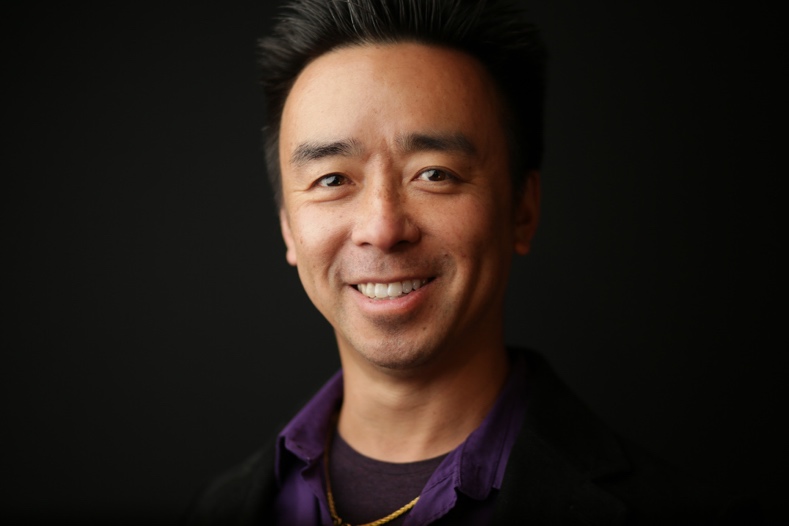
Brian S. Chan
Dr. Brian S. Chan is an assistant professor at DTS, where he teaches courses on the theology of creativity and beauty, visual artmaking, storytelling and faith, film, and creative writing. He previously pastored in Hollywood/Los Angeles and taught at Biola University, focusing on the theology of beauty, art, and film. Dr. Chan is also an internationally award-winning fine artist and serves as a workshop instructor in Hollywood. He is a board member of Lantern of the East Los Angeles International Artists.
As a certified kung fu master, Dr. Chan trained actors while in Hollywood. He authored The Purple Curtain: Living Out Beauty in Faith & Culture from a Biblical Perspective and Not Easily Broken (a novel). He is the chapter director of the Hollywood Prayer Network at DTS and mentors Christian artists in Europe through the European Leadership Forum.
Dr. Chan holds a BA in Psychology and a BA in Sociology from UC Davis, an MA in Christian Education and a ThM in Historical Theology from DTS, and a DMin in Philosophy from Talbot School of Theology. He is currently pursuing a PhD in Theology and the Arts at the University of Birmingham in the United Kingdom.
Dr. Chan lives in Frisco with his wife, Ellen, and their son, Josiah. For leisure, he enjoys tai chi in the park, creating bonsai art, collecting toys, goofing off with his son, and watching a good movie.

Kasey Olander
Kasey Olander works as the Web Content Specialist at The Hendricks Center at DTS. Originally from the Houston area, she graduated from The University of Texas at Dallas with a bachelor’s degree in Arts & Technology. She served on staff with the Baptist Student Ministry, working with college students at UT Dallas and Rice University, particularly focusing on discipleship and evangelism training. In her spare time, she enjoys reading, having interesting conversations, and spending time with her husband.
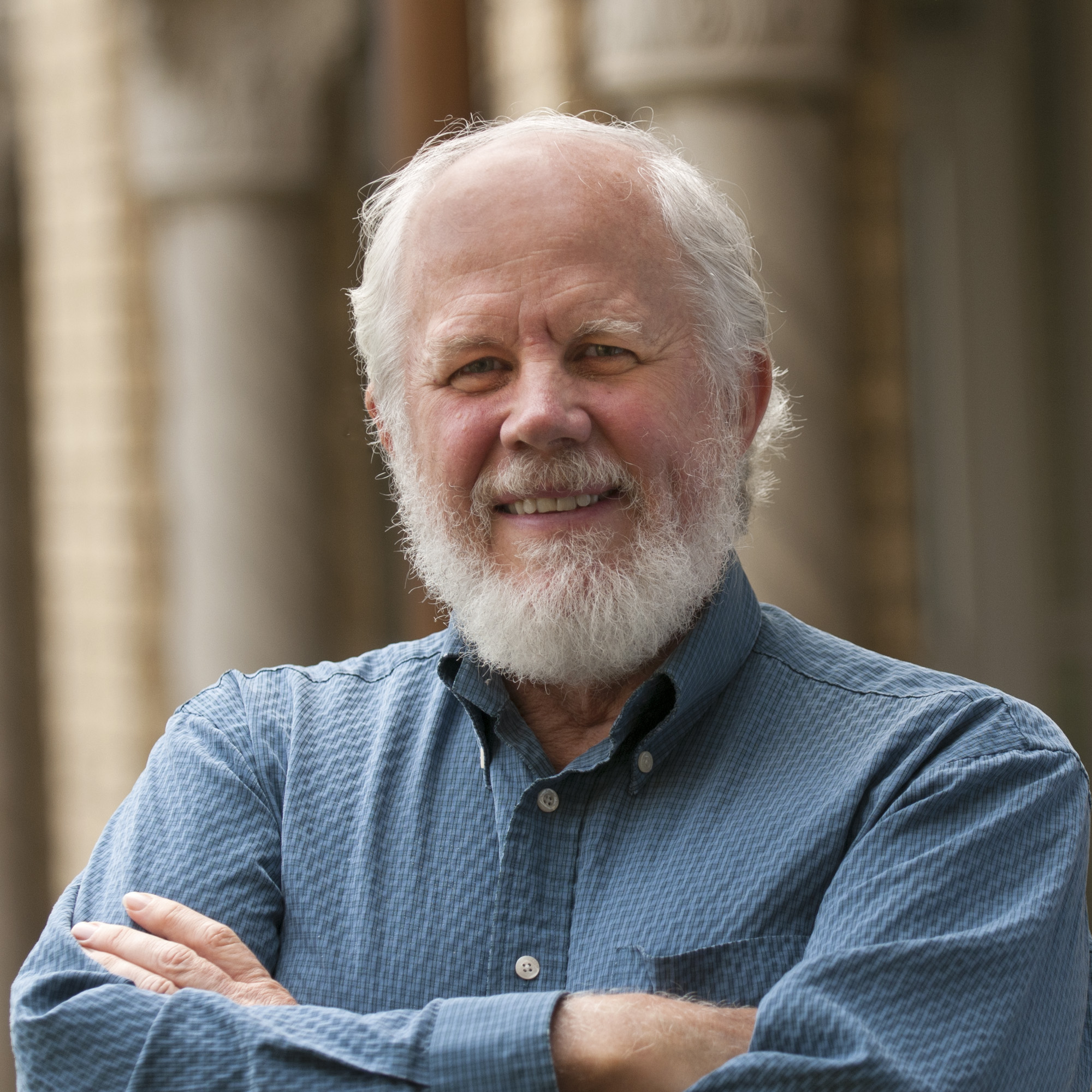
Reg Grant
Dr. Reg Grant has recently retired (July 1, 2024) as Chair and Senior Professor of the Department of Media Arts and Worship at Dallas Theological Seminary. He also served as Director of the Master of Arts in Media Arts and Worship degree program at the seminary since its inception in 2011. He has been teaching courses in preaching, drama, oral interpretation, and creative writing since 1977. He serves on the board of directors for Insight for Living. He has authored novels, textbooks, and articles and has written, produced, and acted for radio, television, theater, and film. His films have garnered several Emmy award nominations and two Emmys, as well as numerous film festival awards, including Booklist Starred Reviews, multiple Telly Awards, and the prestigious Golden Apple Award for best educational film in America. Reg and Lauren have three grown children and are the proud “Lolly” & “PoP!” to their three grandchildren, Johnny, Evan, and Sweet Charlott Grace, whom we call “Charlie.”
Contributors


