
“Blue Train” (1957), John Coltrane
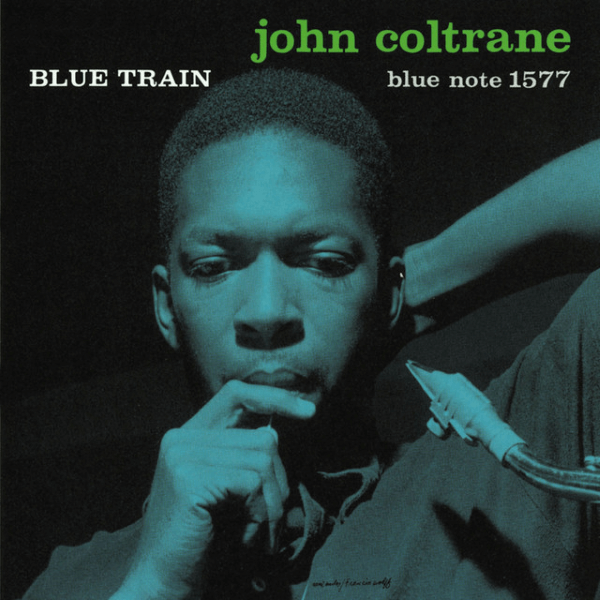
When I stumbled my way to John Coltrane’s 1957 album Blue Train, I had no idea what exhilaration and joy awaited me, nor how often I would return to this recording—and I didn’t know what the album meant to Coltrane himself. My family’s appreciation for music hadn’t included much jazz, yet I chose to learn saxophone in sixth-grade band. A couple years later, my teacher mentioned some important saxophonists I should listen to—Charlie Parker, Sonny Rollins, Cannonball Adderley . . . and John Coltrane. I wandered into a record store, browsed the jazz CDs, and purchased Blue Train for the superficial reason that I thought the cover photograph of Coltrane looked cool. The moment I heard the rhythmic punctuations of the horn players in the opening chorus of “Blue Train,” the album’s first song, I was mesmerized.
The year 1957 represented a turning point for Coltrane. For years before recording Blue Train, he was stumbling. “But as for me, my feet almost slipped” (Ps 73:2)—except Coltrane’s enemy was not the ungodly but his own failings. Addiction to heroine had caused him to lose his musical focus, his friendships, and his job in Miles Davis’s jazz group. “I was ignorant and lacked insight; I was as senseless as an animal before you” (Ps 73:22). From those depths, Coltrane cried out to God. “I thought the Lord had taken the gift of music away from me,” he recalled. “I promised the Lord if he would give me back the gift, I would become a preacher on my horn.” In the spring of 1957, he isolated himself and dropped the drug addiction, cold turkey. And that summer, he began to find his way forward in music.
In September, he went to the studio with five other musicians and recorded the five tracks that became the album Blue Train. The result established Coltrane as a premier composer, bandleader, and performer. When I listen to the song “Blue Train,” I don’t hear doubt or fear; I hear a confident sound spiraling up to heaven, inviting the listener to join Coltrane in his newfound joy and purpose. The unison melody at the beginning broadens to harmonies (0:18), and then Coltrane’s saxophone pulls free, eager to soar (0:36). Having been lifted from the pit, Coltrane can now sing with the psalmist, “Whom do I have in heaven but you? . . . as for me, God’s presence is all I need. I have made the Sovereign Lord my shelter, as I declare all the things you have done” (Ps 73:25, 28).
Questions:
- Read Psalm 73. What enemies, internal or external, tempt you to lose your focus on God?
- What songs and sounds help you enter “the precincts of God’s temple” (73:17) and rediscover your purpose?
- Listen to “Blue Train.” Pray along with John Coltrane’s improvised saxophone solo and ask God to restore your joy in declaring all the things God has done.
- Consider the way an improvised jazz solo represents an in-the-moment expression of artistry. As you go about your everyday tasks this week, think of each moment as an opportunity to say, “God’s presence is all I need” (73:28) . . . right here and now, regardless of what struggles I may face tomorrow.
For more devotionals in this series, click here.
About the Contributors

Neil R. Coulter
Neil R. Coulter completed degrees in music performance and ethnomusicology from Wheaton College and Kent State University. He and his family lived in Papua New Guinea for twelve years, where Neil served as an ethnomusicology and arts consultant for Wycliffe Bible Translators. In 2015, he helped design and launch the PhD in World Arts at Dallas International University. He teaches doctoral courses in theory and ethnography at DIU’s Center for Excellence in World Arts. At DTS, he teaches about art, literature, film, and theology, and he is senior writer and editor of DTS Magazine. Neil is married to Joyce, and they have three sons.
Contributors


