Serving Students Everywhere: DTS Expands into Arabic Language
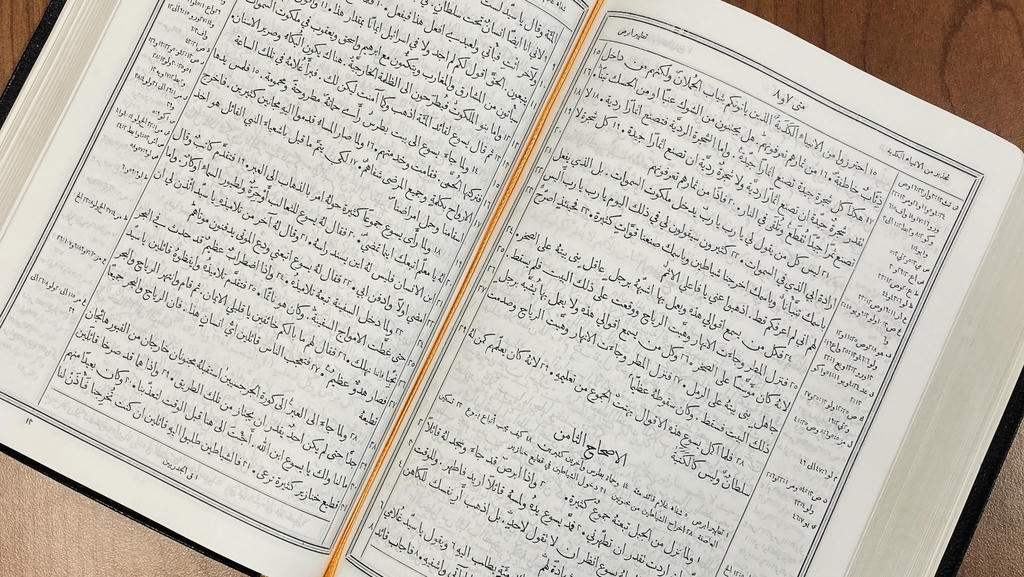
For the proclamation of God’s Word and the building up of the body of Christ worldwide—that’s the conclusion of Dallas Theological Seminary’s mission statement. The seminary equips students for this purpose, that the world might encounter and believe in Jesus Christ. This global focus echoes the apostle Paul’s challenge when asked how people can “believe in one they have not heard of,” and how they can “hear without someone preaching to them?” (Rom 10:14 NET). Taking seriously the mission to preach the Word worldwide, we might ask: How can they hear if no one preaches in their language? In response to the needs among the majority languages in the world, DTS has expanded its teaching into Spanish and Mandarin—and this year, it grows to meet even more communities with the launch of certificate and degree programs in Arabic.
The first cohort of students ministering in Arabic-speaking contexts has just begun the semester at DTS. They will pursue the Graduate Certificate in Christian Studies (GCCS) or the Master of Biblical and Theological Studies (MBTS) through courses taught in Arabic, with Arabic reading materials and resources. Courses are offered in a prerecorded, online format, making them accessible to students anywhere in the world. The ten students in the first cohort are based in the US and countries in the Middle East. Their first course is a biblical study of the theological concept Trinitarianism.
Program director Milad Dagher understands the value of seminary education and the importance of training ministry professionals in the language of their community. He taught in Lebanon from 1988 to 1997 before moving to Dallas to study at DTS. Seven years later, he returned to Beirut, equipped for leadership in seminary education and pastoral ministry. “I was pretty fluent in English at the time I arrived in Dallas,” he recalls, “but sometimes professors at DTS would use illustrations that would make me think, ‘What in the world does that mean?’” After he returned to Lebanon, he began thinking about the next generation of teachers and pastors, many of whom do not have the English fluency to thrive in a US-based seminary and do not want to leave their current ministry to move to Dallas.
That interest in preparing students for ministry in Arabic was shared by DTS leadership, including then-president Mark Bailey and current president (and Dagher’s seminary classmate) Mark Yarbrough. In 2022, after years of dreaming together about a possible program, conversations about Arabic-language instruction became more specific. Over the next two years, the Lord led Dagher to begin transitioning away from his ministry in Lebanon. In January 2024, he began working remotely, part-time, as an adviser at DTS, and in June that year, he and his wife moved to Dallas to prepare for the first cohort of students.
The DTS-Arabic program “will help me to elaborate and teach the word of God with integrity, and to take a correct biblical view on many topics that are prevalent in our world,” said one student, “and it will teach me how to serve others more effectively and to love them more practically.” The first students look forward to the benefits of studying in a virtual cohort of likeminded people who understand the cultural contexts of Arabic-speaking communities throughout the world and the ministry challenges and opportunities present in those communities. Arabic is spoken by nearly 400 million people worldwide, making it one of the most strategic languages for gospel ministry today.
As the program develops, Dagher hopes to build collaborative relationships with other seminaries. “My dream is to have a consortium of schools working together to make better degree programs that serve Arabic-speaking students everywhere,” he says. But the initial priority is to shepherd the DTS students through the program.
The goal of the new program follows the mission statement of the seminary: to equip godly servant leaders to proclaim God’s Word and build up the body of Christ worldwide. With the program in Arabic, the seminary’s mission will now extend to the Arabic-speaking world in new, exciting ways.
About the Contributors
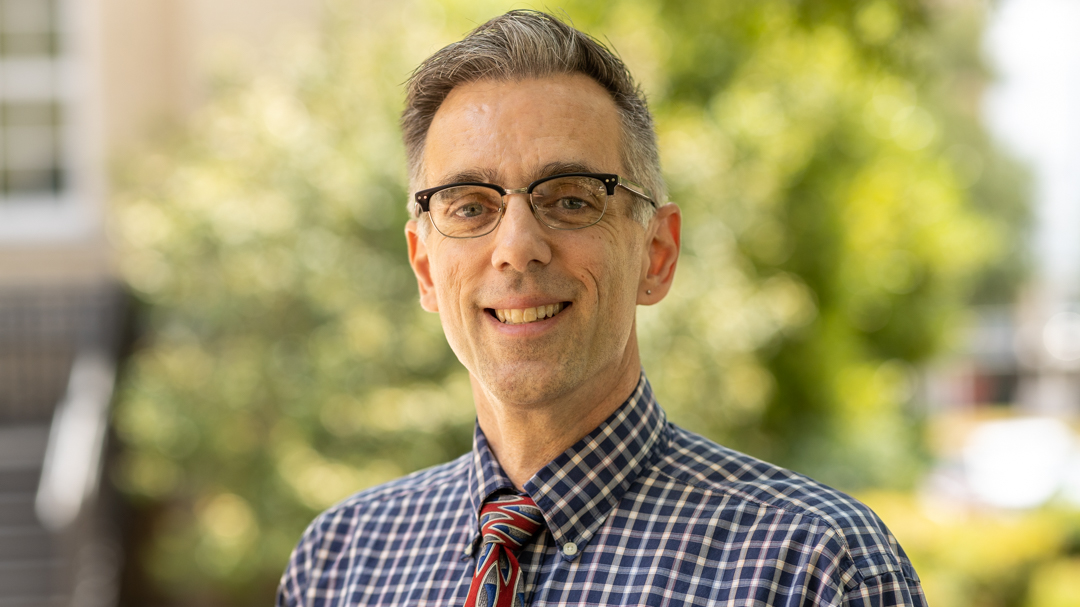
Neil R. Coulter
Neil R. Coulter completed degrees in music performance and ethnomusicology from Wheaton College and Kent State University. He and his family lived in Papua New Guinea for twelve years, where Neil served as an ethnomusicology and arts consultant for Wycliffe Bible Translators. In 2015, he helped design and launch the PhD in World Arts at Dallas International University. He teaches doctoral courses in theory and ethnography at DIU’s Center for Excellence in World Arts. At DTS, he teaches about art, literature, film, and theology, and he is senior writer and editor of DTS Magazine. Neil is married to Joyce, and they have three sons.
Contributors


